The pope’s plaything

Picture a miniscule centro storico — really just a few blocks of old stone houses — the kind with a church and a butcher and a funeral parlor, and a road leading to the next town a few kilometers away. As in every such town, there’s a café where the elders and youth gather at separate tables to smoke cigarettes and watch the days fizzle into evening. It’s a quiet existence. Separation of the sexes and all.

It’s in such a town that we have landed, at the feet of Assisi, Italy’s “holy city” (as my wife keeps reminding me). Assisi, from our vantage point, crouches majestically on its hillside; behind it looms the Subasio, capped with snow. The sky broadens outward in every direction. It’s a marvelous landscape.

Somewhere in the “The Gay Science,” Nietzsche wrote that a mountain is impressive from far off. Once you’re on top of it, though, your perspective changes. It’s no longer so stately. It’s just a collection of trees, rocks and paths. I am reminded of this every time we go to Assisi. If you’re not in the market for holy relics or religious trinkets, there’s not much to do except stroll around and have a bite to eat.

In our town there is a 10-foot-high crucifix in front of the elementary school. As an atheist I can deal with religious imagery. Such things don’t put me off because to me they lack meaning. But I am adamant about such symbols not being part of the civic realm. They don’t belong in police stations, in courtrooms or — make that especially — in public schools.
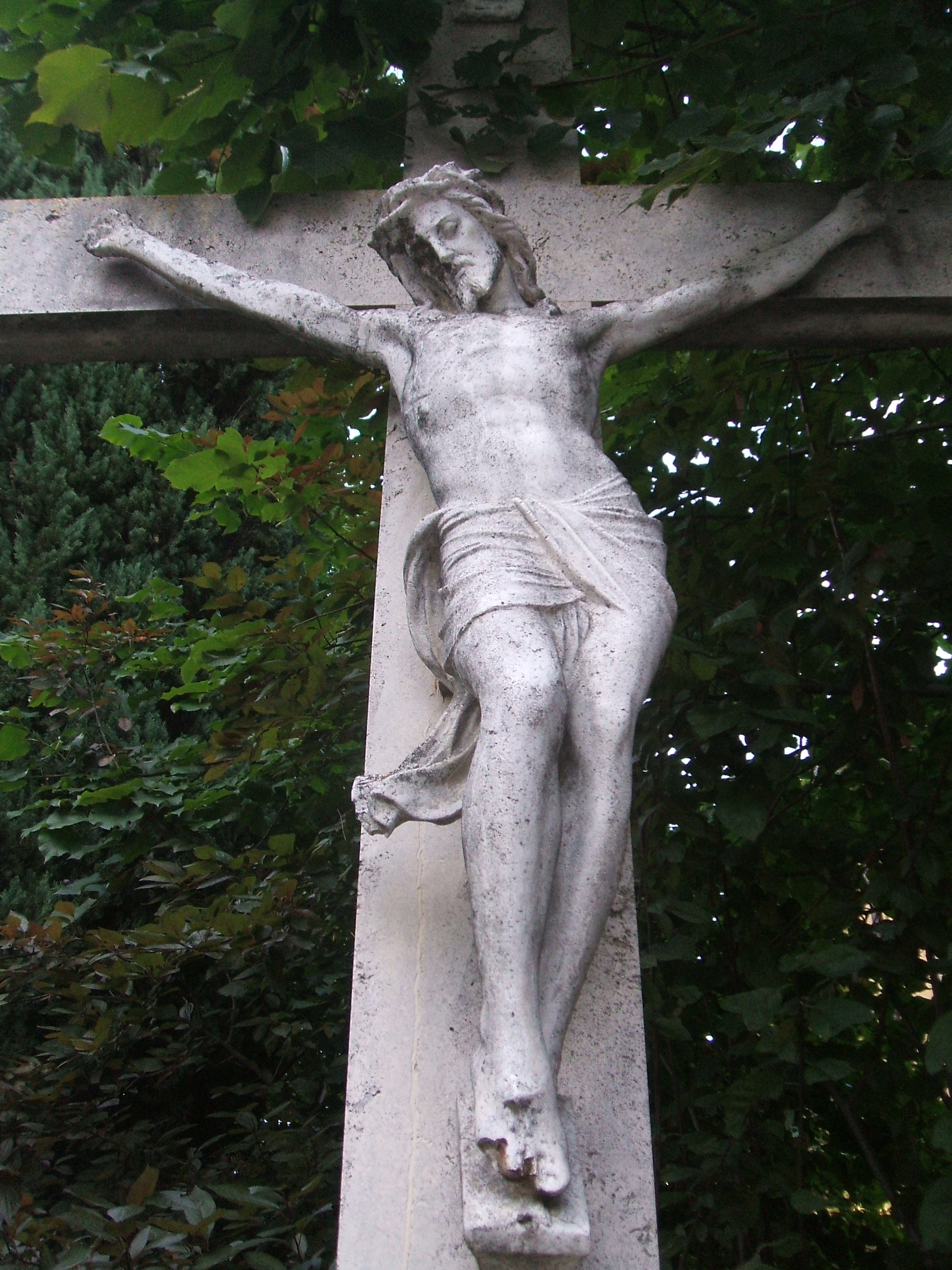
To paraphrase a friend: Did I think living in a small village in central Italy, nestled in the region of St. Francis of Assisi, would be a secular cakewalk?

No, of course not. But what about the rest of the country? The Catholic religious saturation of public life isn’t an Assisan problem. It’s an Italian problem. You can’t go anywhere in this country without the crucifix being — excuse my French — shoved down your throat. It’s literally everywhere you turn. It’s even on the peaks of mountains (yes, there are even mountain climbers who attempt to “convert” nature). It’s so prevalent that most people — even most secularists — think its normal. It isn’t.

Thankfully, there is a proper place for the crucifix. It’s called a church. Or a home. Or a Catholic school (though one may rightly question the very idea of “faith schools”). It is emphatically not the public classroom, which should be a haven for secular education and social integration. If Italy is ever to hold its head high in the European Union, it must break its mischievous pact with the Vatican and stop ransoming its youth to the bishops. It must give up its de facto state religion once and for all. It must regain its independence and integrity, in short.

March 17, 2011 is a national holiday. We’re supposed to celebrate 150 years of the unification of Italy. Many Italians smile awkwardly at the thought of Italy being united because they know it isn’t. Not really. But it’s worth remembering that one of the fundamental freedoms won by the Risorgimento was the secular state. It was an exercise in putting the Catholic Church in its place by restricting its sphere of influence (and its landholdings). Of course, the Vatican bounced back under Fascism — and never went away.

I love this country. I’m proud of its rich cultural heritage, its contributions to art, science and gastronomy. But the world is laughing at us right now. Italy’s two most powerful men are a fount of endless shame and embarrassment. One lives like a gluttonous sultan out of the “Thousand and One Nights”; the other, in the words of Christopher Hitchens, is “a mediocre Bavarian bureaucrat… responsible for enabling a filthy wave of crime.” Both of these men, prime minister and pope, have virtually unlimited power to do as they please with this country. It is their plaything.

I don’t mean to assert that if the Catholic Church is politically hobbled the crooked will be made straight. That’s just one example, albeit a pervasive one. There’s also widespread nepotism, organized crime, political corruption and a countless other shortcomings. And every one of them takes cover in the shade of the church. Perhaps folding that umbrella would prove a promising start to further reform. It’s worth a try.

Contrary to widespread belief, Italy doesn’t need a violent revolution to right its wrongs. It doesn’t even need an Egyptian-style popular uprising. It needs a revolution of legality, which may prove far more difficult than beheading kings.

Published in The American

A Bible in Every Home

The Klansmen up north now want to make sure every home has a bible in it, at least in their jurisdiction. Re-christianization? You’d think there were menorahs in every public place and synagogues a-go-go, or perhaps the piercing cry of a muezzin penetrating the whine of the baby Jesus on Christmas day. Just what are these people fighting for, and against? They already live in a society that protects their religion on a silver platter, with a separate clause in the Constitution just for them. Now they want to throw out all the immigrants (non-Christians, or just “non-whites?”) and enrich the bookshelves of those allowed to stay with a book they probably haven’t even read themselves.

I agree that every person should read the bible at least once. Only then can they grasp the madness that drives such crusades as this.

It’s Going to Be a Very White Christmas

Northern mythologies

Some people are saying it’s a bit early to start worrying about Christmas. In the US, ’tis the season to be merry as soon as the Thanksgiving turkey exits the small intestine (or is it the large one?). In Italy, people begin bustling on December 9, the day after they celebrate the Immaculate Conception (“immaculate”, that is, since Dec. 8, 1854 when that rogue Pius IX said so). What was it before, I wonder? Just another normal, sex-begotten conception methinks. You can only undo that with dogma.

But that’s not the point of this post. I’m not even baptized, so none of this theological hemming and hawing means much to me anyway. Besides, anyone who reads this blog is aware that virgin births, transsubstantiated wafers, celestial voyages of the dead and stigmata are not “my kink” (as they say in the world of sex-blogging). Though I admit I find them fascinating and relevant to understanding the passions and prejudices of my fellow citizens and – in some cases – family members.

“White Christmas”, in fact, is the name given to an anti-immigrant movement in Northern Italy. Yes, it’s those Ku Kluxers again, the Northern League, who are behind this. The “white” in White Christmas – as I hope you guessed – doesn’t refer to snow or the snowy purity of the baby Jesus on his (sic) birthday, but rather to the milky complexion of the militant Christians that inhabit certain regions of the chilly Lombard north. And they don’t like immigrants at their eggnog parties, either.

So they are taking to the streets this Christmas season in pure holiday spirit: by sending the cops around to immigrants’ homes to make sure their papers are in order. If not, they are to be thrown out (yes, on Christmas, if that wasn’t yet clear). One might imagine that such a violation of Christian “DNA” might get these rogues excommunicated, but one would be wrong. Cardinal Angelo Bagnasco, president of the Italian Episcopal Conference, reportedly gave them but a little slap on the wrist.

Yet another marriage between church and state, as this crusading has been approved – and is being copied in other townships – by the local government. No cross, no crown?

Is this really the way to deal with immigration in a country with no real assimilation program for immigrants? Not even the all-encompassing, all-accepting, all-loving representatives of God on earth are raising their powerful finger in protest? I mean, we’re not talking about Muslims or Jews, or even atheists (boy, I’d hate to have to rely on them to get me out of a jam), but fellow Christians. Is this really the best the Vatican can do to spread its message of universal love and the transcendent power of suffering?

Here’s another tempting thought: immigrants without papers don’t vote, now – do they?

The Crucifix Debates: No End in Sight

Can it be uprooted?

In 2003, the year I moved to Italy, I witnessed my first “crucifix debate” on television. Adel Smith, the controversial protagonist of that episode and the founder of the Italian Islamic Party, had caused a stink by demanding that all crucifixes be removed from public buildings in Italy. They apparently offended him, though he was raised as a Catholic. He even threw one out the window of his mother’s hospital room. Religious conversion is strong medicine.

Six years later, the debate is back. The European Court of Human Rights in Strasbourg, France has ruled that crucifixes in Italian schools violate the religious and educational freedom of children. At the center of the debate this time is a non-religious Italian family who don’t want their children to be conditioned by religious symbolism in what is nominally a public classroom.

Some readers might be asking themselves, “But why are there crucifixes in public schools in the first place?!” To an American, this is unthinkable. But the Vatican is not in New York City. And it’s where the trouble began more than 80 years ago with what is known as the Lateran Treaty.

The Treaty was devised under the Fascist government of the 1920s, and it stated that Catholicism was the sole state religion. Part of the agreement stipulated the presence of the crucifix in all Italian schools and public buildings, where they remain to this day, and “religion hour” — the teaching of the Catholic religion in all public schools. The religion teachers are handpicked by the Vatican and paid for by the state. Roll over, Thomas Jefferson.

All of this flies in the face of the Risorgimento, of course. Italy, as an autonomous nation, was founded in direct opposition to the Church. The integralist Pope Pius IX famously referred to himself as a “prisoner of the Vatican,” and no pope after him — until the agreements with Mussolini’s government — would set foot on Italian soil. In a country proud to have moved past the Fascist era (there is even a national holiday to this effect), it is perhaps anachronistic that Article 7 of the Constitution proclaims: “relations [between the Catholic Church and the State] are regulated by the Lateran Treaty.” Why not overhaul that as well, one wonders?

What we have on our hands is essentially a human rights issue. Is there a place for religion in the public sphere of a secular democracy in the 21st century? Religious apologists have remarked that we might as well tear up the Union Jack and the Finnish flag (and the Danish one, I suppose, that bastion of secularism), all of which have crosses. They’ve also suggested that the flag of the European Union has an encrypted Madonna and child among its 12 stars. Or that Europe has non-negotiable “Christian roots.” In these claims one hears the pronounced voices of reactionary bishops more than those of civil servants in a modern democracy. Yet Prime Minister Silvio Berlusconi, Education Minister Mariastella Gelmini and Italian Senator Rocco Buttiglione all made them, among others. Defense Minister Ignazio La Russa, topping them all, said recently that the EU court could “…go to hell. We’ll never take down the crucifixes.”

Even more telling are the attempts made by some Catholics to separate the crucifix from its religious context. As the Italian Bishop’s Conference put it, “The multiple significance of the crucifix, which is not just a religious symbol but a cultural sign, has been either ignored or overlooked.” Which raises the question: what culture are they referring to?

Italian culture is, like all other cultures in all other times, a grab-bag of goodies. Of the 3,000 or so years of recorded Italian history, Christianity has decidedly marked the last 2,000. But Judaism, it is often pointed out, has a longer history on the peninsula than the offshoot sect. Should Jews then insist mezuzahs be nailed to every doorpost of every public building from Bolzano to Syracuse? They have as good a case as anyone.

Of course, no one will take my little provocation seriously. After all, there are Jewish schools that cater to the needs of religious Jews. The same should be expected of Catholics.

Public spaces are for everyone. They are not Christian, Jewish, Muslim, Wiccan or Buddhist. Taking crucifixes off the walls (Buttiglione comically suggests that a plethora of symbols should go up instead — a solution even more risible than their elimination) does not condemn Catholics to atheism. This conveniently misses the point. Religious freedom includes freedom from religion as well as the freedom of religious affiliation. People in their homes may display any symbols they desire, or even a multitude of them. They may frequent any house of worship or none at all. They may read the Gospels or the speeches of Robert Ingersoll. On this, I think, we all agree.

The promotion of the crucifix from a strictly Catholic religious symbol (Protestants don’t use it) to a “universal” symbol of inclusion and suffering is dishonest sidestepping. The conflation is simply insulting. Nothing could be less universal than a religion, especially one with an unbroken tradition of obscurantism, religious warfare, persecution and anti-modern policies. Besides, nearly all Catholics in the developed world flout Catholic dogma when it contradicts their immediate personal interests — without so much as flinching before the eternal fires of hell.

What more proof do we need that the European Union is bound by the modern secular principles of human rights and not the by cross (much less the crucifix)? Why not cut the head off the bull, as they say here in Italy, and abrogate the Lateran Treaty once and for all?

Published in The American

Why Are We Still Arguing About This?

Today the European court made an important ruling against the display of crucifixes in Italian public schools, saying that “the display of crucifixes in Italian public schools violates religious and education freedoms.” Right. But the Vatican doesn’t see it that way. In fact, they (and most Italian politicians who either believe this hooey or don’t have the balls to stick up for their country against the bishops) are even trying to twist the crucifix into a universal, non-denominational “cultural” symbol. As Education Minister Mariastella Gelmini puts it:

”In our country nobody wants to impose the Catholic religion, let alone with a crucifix, but it is not by eliminating the traditions of individual countries that a united Europe is built.”

The Bishops’ Conference added:

”The multiple significance of the crucifix, which is not just a religious symbol but a cultural sign, has been either ignored or overlooked.”

Don’t be fooled. Europe is no more united by the crucifix than the United States are by the Ten Commandments. In fact, if anything unites the countries of the Euopean Union, it is a collective desire to get beyond the stifling, warring factionalism of inter-Christian warfare. The Catholic church imposed itself on Europe (and much of the rest of the Christianized world) largely through religious war and political domination, extirpating all other religious denominations except for Judaism, which was left to suffer beneath the heel of the Church as a “living witness” to Christ. Ghettoized, expelled, forced to convert, stripped of their rights and property, they were prepared for the slaughter of crusades, pogroms and – given enough time – the unprecedented carnage of the Shoah. This is the legacy of the Christianization of Europe and the universal values of the Catholic church.

It’s time Europe left them behind for good, making Christianity just another one of the many competing religious and non-religious identities on the continent. Everyone has the right to choose a religion and practice it, believe in it and love it. But no one has the right to impose that religion (yes, Christianity is a religion) on anyone else. Italy is a secular country, born in strict opposition to the totalitarian dogma of the late 19th century church (infallibility, et al). Under Mussolini, the church was given new life as a de facto state religion. The Italian constitution has upheld these agreements to this day.

The time has come for them to be abrogated in the name of humanism and a pluralistic, secular Italian state with freedom of religion for all and privilege for none.

Debaptism Is Your Human Right

Lately I’ve been fascinated by the debaptism phenomenon in Italy, called “sbattezzo.”  The numbers of debaptisms aren’t high yet (a few thousand are presumed), and it’s difficult to gauge exactly how many people debaptise themselves (I prefer the reflexive form) because the only records are kept by the Catholic church itself. Being a strictly individual act, there is no association of debaptized persons. The option is, however, promoted by the Italian Union of Rationalist Atheists and Agnostics (UAAR) as coherent with religious freedom and freedom from religion.

Below are three videos about debaptism. They’re in Italian, so get a dictionary out if you have trouble understanding. This is one of the most interesting new developments in Italy in recent years, challenging the widely held belief that “all Italians are Catholics” and, far more importantly, the self-granted authority of the Catholic church over the lives of unwilling subjects. 

It’s important, in my view, that people know that debaptism is an option. I’ve never been baptised, so this is not my personal war against the Catholic church (in case you were worried). But it is consonant with human rights and individual freedom to be able to undo a symbolic gesture like baptism. There are also legal aspects related to Canon Law, but that’s Adele Orioli’s job (the woman in the videos) to explain. I’d bet most people don’t even know they have this right, which is why they’ve launched this campaign.

Article 18 of the Universal Declaration of Human Rights

Everyone has the right to freedom of thought, conscience and religion; this right includes freedom to change his religion or belief, and freedom, either alone or in community with others and in public or private, to manifest his religion or belief in teaching, practice, worship and observance.