The pope’s plaything

Picture a miniscule centro storico — really just a few blocks of old stone houses — the kind with a church and a butcher and a funeral parlor, and a road leading to the next town a few kilometers away. As in every such town, there’s a café where the elders and youth gather at separate tables to smoke cigarettes and watch the days fizzle into evening. It’s a quiet existence. Separation of the sexes and all.

It’s in such a town that we have landed, at the feet of Assisi, Italy’s “holy city” (as my wife keeps reminding me). Assisi, from our vantage point, crouches majestically on its hillside; behind it looms the Subasio, capped with snow. The sky broadens outward in every direction. It’s a marvelous landscape.

Somewhere in the “The Gay Science,” Nietzsche wrote that a mountain is impressive from far off. Once you’re on top of it, though, your perspective changes. It’s no longer so stately. It’s just a collection of trees, rocks and paths. I am reminded of this every time we go to Assisi. If you’re not in the market for holy relics or religious trinkets, there’s not much to do except stroll around and have a bite to eat.

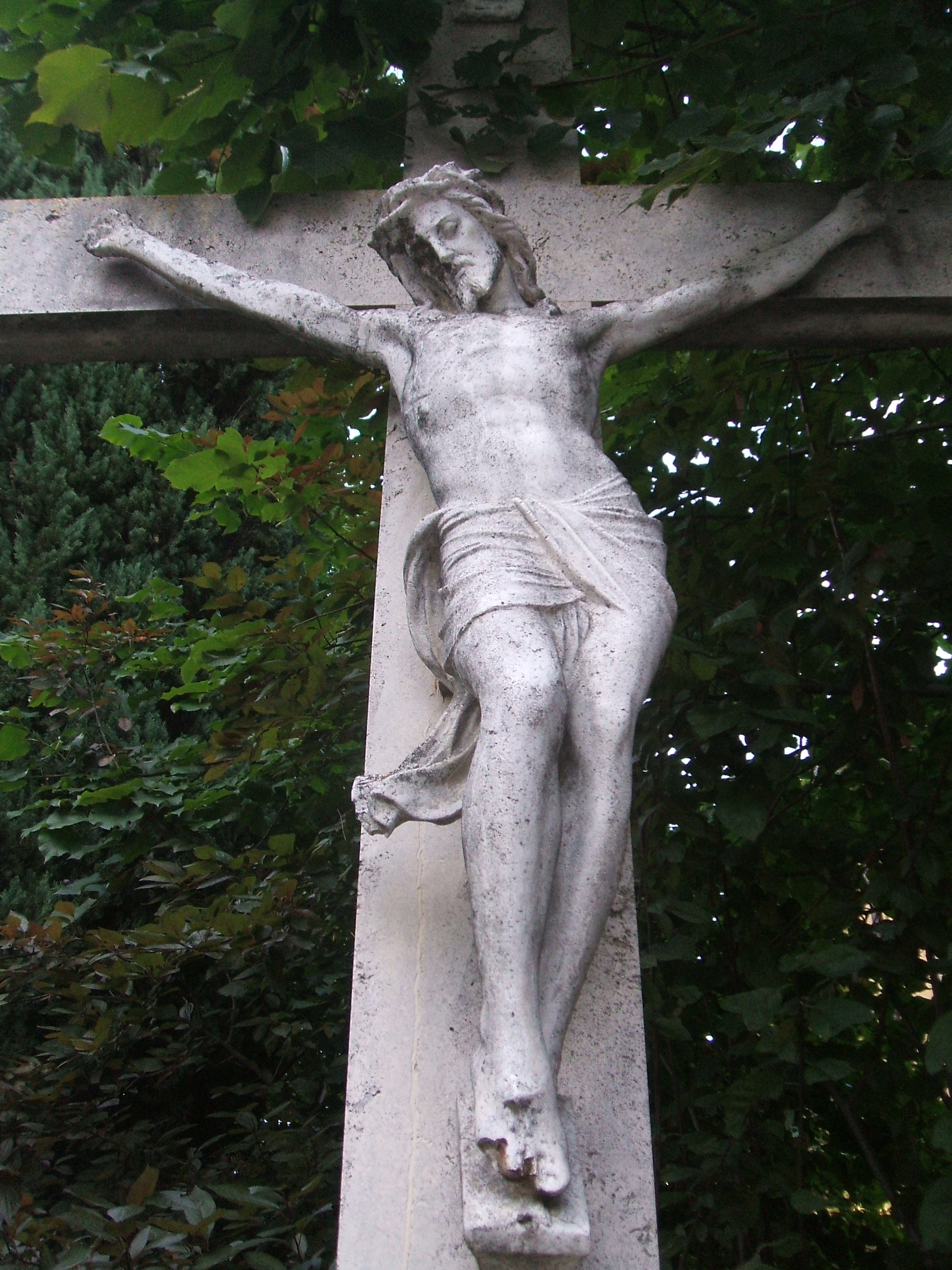
In our town there is a 10-foot-high crucifix in front of the elementary school. As an atheist I can deal with religious imagery. Such things don’t put me off because to me they lack meaning. But I am adamant about such symbols not being part of the civic realm. They don’t belong in police stations, in courtrooms or — make that especially — in public schools.

To paraphrase a friend: Did I think living in a small village in central Italy, nestled in the region of St. Francis of Assisi, would be a secular cakewalk?

No, of course not. But what about the rest of the country? The Catholic religious saturation of public life isn’t an Assisan problem. It’s an Italian problem. You can’t go anywhere in this country without the crucifix being — excuse my French — shoved down your throat. It’s literally everywhere you turn. It’s even on the peaks of mountains (yes, there are even mountain climbers who attempt to “convert” nature). It’s so prevalent that most people — even most secularists — think its normal. It isn’t.

Thankfully, there is a proper place for the crucifix. It’s called a church. Or a home. Or a Catholic school (though one may rightly question the very idea of “faith schools”). It is emphatically not the public classroom, which should be a haven for secular education and social integration. If Italy is ever to hold its head high in the European Union, it must break its mischievous pact with the Vatican and stop ransoming its youth to the bishops. It must give up its de facto state religion once and for all. It must regain its independence and integrity, in short.

March 17, 2011 is a national holiday. We’re supposed to celebrate 150 years of the unification of Italy. Many Italians smile awkwardly at the thought of Italy being united because they know it isn’t. Not really. But it’s worth remembering that one of the fundamental freedoms won by the Risorgimento was the secular state. It was an exercise in putting the Catholic Church in its place by restricting its sphere of influence (and its landholdings). Of course, the Vatican bounced back under Fascism — and never went away.

I love this country. I’m proud of its rich cultural heritage, its contributions to art, science and gastronomy. But the world is laughing at us right now. Italy’s two most powerful men are a fount of endless shame and embarrassment. One lives like a gluttonous sultan out of the “Thousand and One Nights”; the other, in the words of Christopher Hitchens, is “a mediocre Bavarian bureaucrat… responsible for enabling a filthy wave of crime.” Both of these men, prime minister and pope, have virtually unlimited power to do as they please with this country. It is their plaything.

I don’t mean to assert that if the Catholic Church is politically hobbled the crooked will be made straight. That’s just one example, albeit a pervasive one. There’s also widespread nepotism, organized crime, political corruption and a countless other shortcomings. And every one of them takes cover in the shade of the church. Perhaps folding that umbrella would prove a promising start to further reform. It’s worth a try.

Contrary to widespread belief, Italy doesn’t need a violent revolution to right its wrongs. It doesn’t even need an Egyptian-style popular uprising. It needs a revolution of legality, which may prove far more difficult than beheading kings.

Published in The American

Pizza and goats

Supplì al telefono

Nostalgia is never an entirely pleasant sensation, especially when you’re being nostalgic about the present. But this is what happens when you’re leaving a place you’ve lived for long enough to have developed a complex attitude to it. It happened to me in New York City on the eve of my departure: suddenly the rundown storefronts on 10th Avenue began to look otherworldly, poetic, somehow different than they’d looked before. The same is happening now as I stroll through Rome as through a museum exhibit, knowing that in a few weeks it will no longer be home.

I can think of nowhere else people go — except France — for the sole purpose of eating their way through a vacation. There is more art in Italy per square foot than any other place; there are mountains, beaches, an enchanting countryside, medieval castles, ancient stone homes, hilltop townships and historic centers full of fountains and churches and arches that stretch back to Roman times. There are roads that will take you north and south, up to Europe and down to the edge of the Mediterranean. But what makes people really happy is a plate of spaghetti with garlic and oil.

My earliest memories of Rome are, predictably, food-related. They begin when I was seven, slurping grattachecca (a snowball) and chewing coconut slices while hanging around St. Peter’s Square with my family. My father had grown up just down the street. That was when I was introduced to the supreme Roman street food, supplì (or “rice balls” in the parlance of American pizza purveyors), and pizza rossa, which my father could never order in the United States because no one understood why anyone might want pizza without cheese.

At eleven I spent a summer here. Pretty much all I did was eat and read Garfield comics, toting around my Walkman and a handful of cassettes (Bill Hailey springs to mind). I refused to speak Italian, which is surely one of the reasons my parents sent me to Italy in the first place. I was an enigma to my relatives; the only words they could get out of me were the parolacce. I remember stunning people with blasphemy before I could say, “Mi chiamo Marc.” I went home supersized in August, and my family re-branded me “mozzarella.”

Not on pizza

Ten years later there was another spurt of visits with a friend, then with my then- girlfriends. We always followed the same triangular route: Rome, Florence, Venice, Rome. (We once ended up in Greece, but that’s another story). It turns out that all of my cousins did exactly the same thing, year in and year out, a kind of Grand Tour for second-generation Italian-Americans.

I once ordered, to my great embarrassment, pizza with goats. We were sitting in the lovely Piazza della Maddalena, near the Pantheon, and I was showing off a bit. “Vorrei una pizza con capre e alici.” The waiter smirked, catching my error. “I think you mean capperi, capers. Unless you actually want goats.” That’s largely how I learned Italian, through table talk.

But to get back to that supplì, or rice ball, I mentioned earlier. In my book, this is the quintessence of the Roman nosh. A few observations:

    1) It should never cost more than €1.

    2) It should never be larger than your fist.

    3) It should be fried, not baked.

    4) It is not an arancina, which is a similar — but entirely different – rice ball specialty from Sicily. The most delicious supplì are simple, tomato-and-mozzarella-based affairs, though an elegant variation I’ve encountered substitutes squash for tomato.

I suppose I should mention a few things I don’t eat, just to cure the distant reader of envy. My aunt once offered me golden fried mule testicles. How do you turn those down? Tripe is a favorite of many, but might be unfavorably compared to stewed bicycle tire. Lard, or fatback, is up there with pickled pigs’ lips on my list of nausea-inducing delicacies. Add sanguinaccio, or blood sausage. Non-kosher atheist that I am, I still find the Levitican injunction against eating blood insuperable. It’s just sort of gross.

Finally, this is as good a space as any to lament the demise of Rome’s best pizza, which just happened to be kosher. It was not excellent because it was kosher, but because it was unique. The pizzeria was called Zi’ Fenizia, and it was in the Ghetto for years before moving to a lukewarm location near Fontana di Trevi. They served only cheeseless pizza, and their best creations were sopping with tender marinated vegetables, called concia: eggplant, peppers and zucchini.

Everybody I took there raved about it. I was a regular customer until they lost their kosher certification (read: community infighting); then, in the worst-calculated move in pizza history, they began throwing ham and cheese on everything. They called it “giving tourists what they want.” Anyway, they lost heart and the pizza lost its raison d’etre. It was a case of commercial suicide.

And all I could think was, “Do vegetables even need kosher certification?”

– From The American

Italy just got that much more embarrassing

Miseraestupendacittà took this photo. It’s a 2011 Mussolini calendar. Please, don’t touch. We all know how vain dictators are.

Snazzy Italian footwear

Imagine that…

*(I hope the artist doesn’t mind me posting this cartoon. Click on the boot to see more of his/her work.)

100% nonsense

Despite Phil Plait’s infamous “Don’t Be a Dick” talk last year, I still like him. I just didn’t like his message much. But that’s fine, because disagreement is what I do best (if you don’t count foot massages and omelets). He’s especially good – and kind of dickish in a mild-mannered way – on things like astrology. Here are a few words that should be written on a t-shirt. I know I’d wear it.

We knew this already, but it's still good to hear.

More Bibles, please!

Hooray! The Regione di Veneto is passing out Bibles to all the students! Here’s why:

“We’re convinced that the shift towards secularism, often rooted in the precepts of relativism and nihilism, cannot be an effective response to a world in continual evolution…”

What was that about “continual evolution?” According to the Regione di Veneto website,

“The secular laws of our nation are written in the Bible, and it contains the religious norms of our spiritual life. To clarify, our proposal of obligatory Christian education does not infringe upon the Concordat.”

The Concordat means the Lateran Treaty, the agreement with the Catholic Church that public schools will be draped with crucifixes and students will receive (optional – meaning you can sit in the hallway for an hour if you choose) Catholic religious education. In a sense, this is even worse: it’s obligatory, as the website makes clear. What about all those students from non-religious families? They are to be taught that even secularism is Christian, Christian is Catholic and there is to be no escape from Jesus, ever.

Italy is in the throes of a full-fledged War Against Secularism. Everyone from Joseph Ratzinger to the law-makers in Parliament to the regional and local levels of government are caught up in a crusade against the very principles of secularism. Which is ironic, because the Italian Constitution defines laicity, or secularism, as a “supreme principle of the State.”

I hope the students actually read their Bibles instead of trashing them, though. There would be no better way to make ardent secularists out of them.

More religion, please!

On. Giovanna Melandri, a deputy with Italy’s Democratic Party, has recently proposed a law to introduce even more religion into public schools. She has courageously published it on her blog. I’ve commented on it, but my comment has not yet been approved, perhaps due to strong words like “superstition”. I figure the next best thing is to take up the matter on my own blog.

The thrust of her proposal is this: God is alive and well in the world; belief in Him heavily influences the lives of millions and “entire communities;” a sense of the sacred is central to the lives of human beings; we must find a way to live in a multicultural, pluralistic society (presumably without fighting over whose version of God represents the truth); we must engage the “other,” etc…it sounds like she’s been reading Karen Armstrong.

This brings her to the realization that it’s time “to rethink education.” My first thought would be, “Let’s get Catholic religious education out of the schools and increase secular studies like science and foreign languages.”

Melandri’s proposal is – brace yourselves – to introduce comparative religion. She even suggests a “scientific, not a dogmatic approach.” Which sounds nice and fuzzy at first, as if to imply that all religions are part of the fabric of humanity, and none of them have any exclusive claim to truth. But then she adds that “particular attention must be paid to monotheism,” and that “adequate space should be reserved for Eastern religions.” So, Jainism and Islam will share space on the blackboard with Catholicism?

But Melandri admits there might be some difficulty in finding impartial teachers to teach the vast smorgasbord of human belief. Not to worry, though, for “incompatibility between teachers will only be temporary.” How does she know this? It seems to me that in her mind she would like disagreement to simply dissolve before the comforting flames of multiculturalism.

This isn’t realistic. More likely teachers will be at each other’s throats. Supposing there are more than a handful of teachers who aren’t nominally Catholic – already improbable in Italy – and as Catholic religious education is already part of the State curriculum, she will have to convince those lovable, infinitely pliable gentlemen over at the Vatican to loosen their stranglehold on the young. Since no Italian politician is likely to ever go against them, this rings hollow. There is not greater obstacle to comparative religious education in Italy than the Catholic Church.

Further on, Melandri assures us such a multicultural approach won’t infringe upon the Vatican’s right – according to the 1929 Lateran Treaty – to impose its own religious teachings in Italian public schools. She continues: “We believe that the discovery of the transcendental dimension, and how humanity in all its stages has dealt with this experience, is a fundamental component of personal development.” Here the text reads much more like a homily by Benedict XVI than a proposal to teach religion in a “scientific” sense (whatever that means).

In my comment I asked On. Melandri why students receiving a public education should have to study religion – the “catalogue of the world’s superstitions,” as I phrased it. Of what use is it, really? The impracticability of such an endeavor, the fragility of people’s sensibilities about religion, the mutual exclusivity that religion fosters and the utter nonsense of religious belief all point in one direction: less, not more, religion in public schools.

If Melandri wishes to do something radical, she should work on abolishing the Lateran Treaty and minimizing the influence of the Catholic Church, pulling crucifixes of the walls of classrooms and making Italian public schools more secular in nature. That is the only fair way to deal with students of multiple cultural backgrounds: by leveling the playing field once and for all.

Porn!

Or so you would think. This ad for the Renault Twingo has apparently been banned by RAI and Mediaset because it features lesbians. That’s code for “porn”, as we know. You can see it on La7, the only television station worth watching in Italy anyway. I think it’s a sexy, powerful ad, and lesbians are even less visible than gay men, Jews, Protestants and atheists in this country. They need all the publicity they can get!

Those noshing gnus

Jerry Coyne wrote a series of posts last week that got my mouth watering for good old Lower East Side home cookin’. Evidently, we share a pathological love of bagels and other delicacies of Jewish delicatessen: the bialy, the pickle barrel, pastrami and endless varieties of smoked fish. Smoked salmon – or lox, from the Yiddish lox– is perhaps my favorite foodstuff ever invented, besides spaghetti. (And no, spaghetti-and-lox is not a good idea; don’t even bother.)

Italy, a country as famous for its food as it is for its museums (and rotten politicians), has a disturbing lack of bagels. Rome has an American-style hot dog stand, burritos, falafel and Tex-Mex diners, but IT HAS NO BAGELS. This is odd because almost every American I meet who has lived or spent some significant time in Italy has lamented the absence of bagels and expressed the concomitant wish that someone would open up a bagel shop.

Anyone out there planning a trip to Italy, be forewarned: you will get sick of pizza before the week is through. Ethnic food is second-rate and expensive. Pack a dozen or so bagels for your trip; we’ll supply the lox. Buon viaggio!

The ear of the eavesdropper

Italian Prime Minister Silvio Berlusconi recently raised eyebrows by again poking crude fun at the looks of Democratic Party chief Rosy Bindi, his favorite punching bag. “Orcodio!” Berlusconi said in a joke involving Bindi. Roughly translated, the expression means “Fucking God!” Though the Vatican used its daily house organ, Avvenire, to deplore the vulgarity, it seemed more concerned with the damage done to an omnipotent, omniscient Creator than to mere mortal Bindi.

According to Italian law, public blaspheming of “the Divinity” through the use of “invective or offensive language” is punishable by a €51-to-€309 fine. Irish law imposes a €25,000 penalty for similar desecration. In my home state of Maryland, blasphemy was punishable through fines and imprisonment, or both, well into the 20th century. In Muslim-majority countries governed by sharia law, blasphemy can carry the death penalty.

My Merriam-Webster’s Collegiate defines blasphemy is “irreverence toward something considered sacred or inviolable.” By that definition we are all blasphemers in most foreign lands, or even in our neighbors’ living rooms. I may be a blasphemer in my own mother’s eyes.

Just as beauty is in the eye of the beholder, so blasphemy is in the ear of the eavesdropper.

Of all the idiotic laws devised by our species, those on blasphemy are the most flagrantly boneheaded. They’re little more than an intellectual form of Prohibition, and are radically antithetical to what philosopher A.C. Grayling labeled “the fundamental civil liberty,” free speech.

What kind of all-powerful Deity needs secular law enforcement to protect it from the concerted jests of a handful of comedians, biologists and assorted demonic riffraff? In fact, the more you scrutinize the concept of blasphemy the faster you reach the conclusion that it simply does not exist — like God, I’m tempted to say.

In a brilliant article in the Italian free-thought magazine L’Ateo, Viviana Viviani attacked the inconsistency of existing legislation. “The Mother of the Christian God,” namely the Virgin Mary, she wrote, “can be publicly blasphemed in Italy with no penalty.” Mary is not technically a divinity, whatever that means.

The deft can alter a consonant and dupe the Divinity. Laws don’t protect uncles (“Zio Porco“), animals (“Zio Cane“) or people named Diaz (“Porco Diaz“). The Divinity must be a dimwit if he can’t figure that out.

As a counterpoint, a website called “Atheist Ireland” has compiled a list of 25 blasphemous quotes attributed to the likes of Jesus, Muhammad and Pope Benedict XVI. All of us, in fact, are both blasphemers and atheists when it comes to the gods and religious sensibilities of others. Protecting all concepts of the divine from offense would mean creating Stalinist network without borders to check the world’s every utterance.

If anything needs legal protection, it’s not God but freedom of speech.

The attempt to limit expression in the service of protecting the public’s religious sensibilities is a kind of sadism. In a flourishing democracy there’s no protection from opinions you don’t like. You deal with them or find somewhere more congenial to live, preferably a cave. Religion is also a personal choice — unlike ethnicity, handicap or gender. It has more in common with political affiliation or sports fandom than biological happenstance.

In Italy, all-encompassing blasphemy laws are worded to protect even minority religious opinion. Porous terms such as “the Divinity” blaspheme the One God as much as any village atheist ridiculing the faithful in the public square.

Bible readers know that the mere recognition of the plethora of ancient godlings enraged a jealous Yahweh. But Yahweh himself blasphemed to no end against the existence of Ba’al and other false gods.

Much of the Hebrew Bible, or Old Testament, revolves around this basic tension. The result produced the kind of theocracy we see mirrored in today’s Iran, where blasphemy is a crime on par with murder and Holocaust denial is deemed the quintessence of free inquiry.

The surest way to defeat bad ideas is with better ones.

You say God exists and is omniscient. I say that is a comforting illusion.

You say Jesus was born of a virgin and rose from the dead. I say those are fairy tales.

You say Allah punishes the unbelievers. I say give him my address and phone number.

But neither of us gets a last word on the subject, one that is then enacted into law to silence the opposition. The word for that is hubris.

Published in The American