36 Arguments

I just finished reading Rebecca Newberger Goldstein’s 36 Arguments for the Existence of God. Well, I still have to get through the appendix, where the arguments are stated (and refuted) logically, but the meat of the novel is behind me.

Tempted as I was to think of it as the first “new atheist” novel, one whose protagonist is a public atheist a là Sam Harris (though much more cuddly and polite), I’m not so sure if that’s the best way to characterize Goldstein’s book. Which means it’s not fiction-as-propaganda for the new atheism. It’s a pretty sappy modern love story with affectionate portraits of Hasidim reminiscent of Chaim Potok’s The Chosen.

Of course, there’s a lot of what John Brockman dubbed the “third culture,” which means science: game theory, mathematics, anthropology, etc…and a brilliantly over-the-top lampoon of Harold Bloom which is worth the read in itself.

So will this book convince you God does not exist? No. But then again, you don’t need books to help you with that, do you?

Is Suicide Painless?

Yesterday the news reached me that an old friend committed suicide. We grew up together in suburban Maryland. Our families were close. Our mothers and sisters were friends as well. There was a kind of inseparableness that governed our friendship in the golden years before adolescence took its toll and widened the gap between us forever.

He was sent away to a private school, then a military school, ostensibly because he was becoming increasingly uncontrollable and violent. He discovered drugs. When, after a few years, he returned to our public school I didn’t recognize him. He had grown tall and awkward. His skin had taken on a strange shade of purple. His blonde hair was ratty and knotted. His voice had become a bellow and his manners antagonistic. Before the year was out, he disappeared again.

Twenty years have passed since I last saw him. He never kicked his addiction to drugs. Our mothers are still friendly. News of his suicide – despite our unbridgeable distance over the years – is like a small part of my past which has been definitively silenced.

I didn’t think I even cared about him anymore. I was wrong. Alav ha-shalom.

Playing Punk

I had a great and turbulent time in New York, from the moment my mother kissed me goodbye in front of a Bowery hotel when I was 20 to my last meal eight years later in a Flatbush Chinese restaurant. I rented eight apartments, held three jobs, spent seven months on the dole, fought two court cases (I won both), and survived two relationships. You can only live like that in your twenties, and I did.

My first week in the city I wandered up to the East Village and browsed the used record shops. In those days, music came before books. I nursed the dream of fronting a band, playing CBGB and living on refried beans until I was famous enough to buy a flat on Central Park West. I even bid for and got a job at the Strand, the infamous bookstore on Broadway and 12th Street, because I’d read somewhere that Patti Smith had worked there before she became, well, Patti Smith. If I’d read that she’d worked at Balducci’s I probably would’ve pestered them. Such was the power of punk lore over my neophyte imagination.

While at the Strand I embraced a progressively more degenerate lifestyle. It was a heady place to work, despite the fact that they treated their employees like garbage. The Strand myth was that they would hire anyone: “struggling artists,” squatters, junkies. And they did. In fact, the place was crawling with vice. In the employee lounge — where rats scurried across the concrete floor from time to time — the refrigerator was always chock-full of malt liquor and beer. The management either drank as heavily as we did or looked the other way.

We’d go out and get hammered at the bars on First Avenue for lunch, then as soon as six o’clock rolled around we were back at our favorite watering hole on Avenue B for more. Far eastside bars still had sawdust on the floor and killer jukeboxes. We drank pitchers of McSoreley’s Ale, an East Village specialty, and bopped our sodden heads to Iggy and the Stooges. We’d stumble home to Greenpoint, stopping off at the all-night bodega for a few tall cans of Ballantine and cigarettes.

Around that time I began having severe bowel trouble. My steady diet of ephedrine, Twinkies and Yoo-hoo probably didn’t help. I recall squatting in the public toilet at the Strand munching on alfalfa sprouts, hoping for the best. It certainly didn’t occur to me at the time that ephedrine — which was my over-the-counter answer to shooting speed, something I wouldn’t have had the guts to do anyway — was calcifying my innards. My bad diet did the rest.

A couple of times a year my mom and step-dad would drive up from Maryland to visit. They’d bring me things like old furniture from our basement, crates of used albums and boxes packed with macaroni and cheese and canned salmon (why not tuna, I always wondered?). Then they’d take me, their emaciated son, out for a decent meal at Katz’s or the Second Avenue Deli. Hungry as I was, I’d crunch away at the bowl of sour pickles, slurp down the matzo ball soup and take the uneaten half of my corned beef sandwich home in a napkin. Once my mother even made me try kishke, which was delicious.

With my sister, we visited the Tenement Museum together on Orchard Street. There we found a photo of an original tenants who looked exactly like our mother. I’d take them on rollicking subway rides. I once even took them to the bar where I hung out. I think I wanted to show them my world, let them in on some deep secret about who I had become. Instead, all I managed to do was alienate them. After that, they visited less and less frequently.

On Monday nights I’d schlep down to the Ludlow St. Cafe with my guitar for open mic night. I’d order a pitcher of beer, put my name on the list, and slump down over a barstool to work up my courage. When they called my name I’d stagger up to the stage, plug in my faux-Rickenbacker hollow body to the amp, and start in on Dylan’s “Visions of Johanna.” The changes were simple and I knew all the words; besides, it was my favorite song. How could the public not love it?

Maybe it was my tendency to end every performance in a loud feedback roar a là Sonic Youth, or just the fact that I couldn’t sing and had absolutely no interest in my audience, but on my final night they pulled the plug on me. I kept playing before I realized no sound was coming out of the amplifiers. When it dawned on me, I slunk back to my barstool and ordered another pitcher.

And there died the first of my great New York dreams.

A Review of Summer for the Gods by Edward J. Larson

Clarence Darrow in action

Edward J. Larson has written a brilliant, judicious account of the trial of John Scopes, a schoolteacher prosecuted by the state of Tennessee for teaching the theory of evolution in a public school. The trial was dubbed the “trial of the century” (it wasn’t the first) for its illustrious protagonists. The prosecution was led by the anti-evolution politician William Jennings Bryan, who argued that Darwin’s theory directly attacked religious belief in the divine origins of man. He claimed such teaching would provoke the disintegration of social values and the ruin of morality. He saw his mission on the witness stand as a crusade. The people of Tennessee are Christians, he stressed, and they — not high-falutin’ experts — should decide what was fit or unfit to be taught in their schools.

Clarence Darrow, the iconoclastic defense lawyer and self-declared agnostic, led the defense. Darrow’s position was that what was at stake was a return to medievalism and the bludgeoning of the human intellect in the name of orthodoxy. It was, in his view, a question not of religious truth but of human rights.

The centerpiece of the trial was the joust between Darrow and Bryan. Darrow grilled Bryan on his literalist reading of the Bible, laying bare the flimsy intellectual foundations of such blind faith. Bryan, for his part, held to his position that it didn’t matter if what the Bible said seemed incomprehensible to us; it was the word of God. He did, however, concede that the six “days” of creation were best interpreted as geologic “ages,” a concession that later fundamentalists would never forgive him.

Bryan died a week after the trial. Some of his supporters blamed Darrow. H.L. Mencken, who reported on the trial for the Baltimore Sun, gave a brief eulogy: “If the village barber saved any of [Bryan’s] hair, then it is curing gallstones down there today.”

The Scopes Trial has echoed across America’s cultural battlefields for over eighty years, most recently in the Katzmiller vs. Dover ruling of 2005 that the teaching of Intelligent Design “violated the constitutional bar against religious instruction.” In light of such recent attempts to dress up creationism in sheep’s clothing, we might be grateful to William Jennings Bryan for his honesty; at the very least, he felt his religion was strong enough to survive the assault from science and reason on its own merits — or die fighting.

From The American

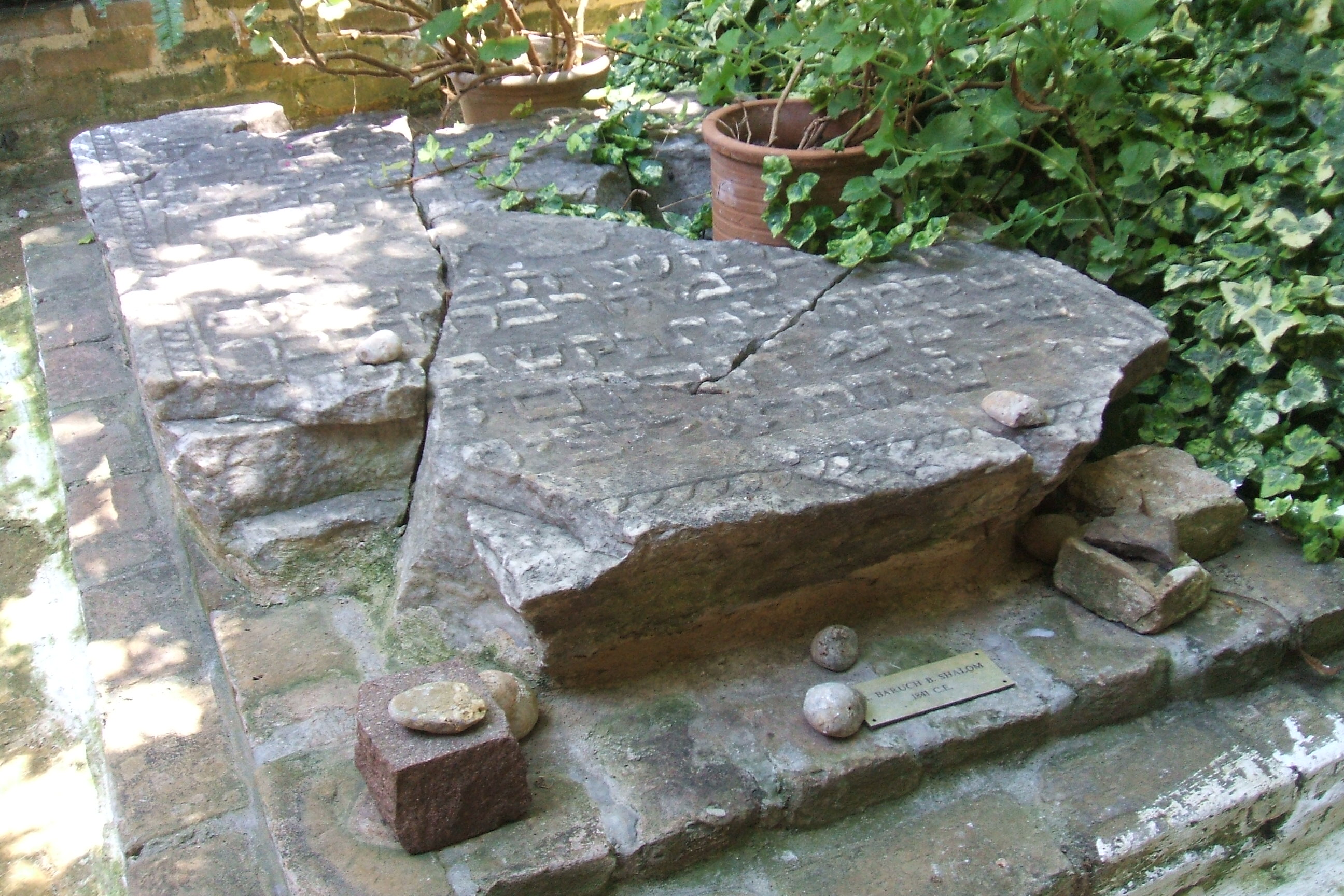
Some Photos of Etz Hayyim Synagogue in Crete

Summer ’08. Before the arsonists got to it.

Crete Synagogue Burned Down

We visited this synagogue, Etz Chayyim, on our trip to Crete in 2008. It was a beautiful, tranquil, unpretentious place open to the public. Apparently, they used to boast that it was one of the last Jewish buildings in Europe (or elsewhere, for that matter) without 24/7 surveillance. This will change, of course, once they get the synagogue up and running again.

There aren’t many Jews in Crete. Most Greek Jews live in Athens. And there aren’t many of them there, either. Why anyone feels threatened by Jews is a mystery to me; why anyone feels threatened by a reconstructed synagogue (it had been used as a pigsty until the 1990s) is an equal mystery. The BBC reports.

History as a Conspiracy Theory

Here is an excellent interview with David Aaronovitch, author of Voodoo Histories, in Salon.

What makes us susceptible to conspiracy theories?

We want to believe theories that contradict the idea that young, iconic people died senselessly. If a story takes away the accidental from their death, it gives them agency. After the JFK assassination, it was unbearable to many people that they could live in a country where a lone gunman could kill a president. In those circumstances, it’s not surprising that an overarching conspiracy theory emerges. It suggests that somebody is in control, rather than that we’re at the mercy of our neighbors and to some extent of ourselves (as was the case with Marilyn Monroe and Princess Diana). It’s the urge to make sense of a particularly traumatic moment.

In some ways, it’s not that different from the impulse to believe in God.

It is deep down a leap of faith, but it doesn’t present itself as a leap of faith. It presents itself as not only rational but a better kind of rationality. It’s incredibly important that a conspiracy theory has the appearance of science. The literature on Kennedy is beyond voluminous. It’s absolutely enormous. There are vast tomes to suggest that the CIA did it, or other people did. [Conspiracy theorist] David Ray Griffin has come out with a half dozen 9/11 books, and all of them have hundreds of footnotes. They’re either to instant news reports that have since been contradicted, or to other conspiracy theories — but the work nevertheless takes on the appearance of scholarliness.

Aaronovitch also has a blog called AaronovitchWatch, a nod to all the paranoids out there. How long until AaronovitchWatch Watch pops up in a search?

Science Is More Reliable than Faith and Here’s Why

A shout goes out to Agnostic Mom for this cool chart:

On Dual Citizenship

The other day I met up with some friends from out of town. They were in Rome for the day to get their two-month-old daughter’s citizenship papers at the American Embassy. Rob is American and Anna is Italian. They met in Nepal, where they were both stationed while working for various transnational employers. They married in Italy, and their daughter Clara was born in Perugia. In a few weeks she will be returning to Nepal, where she will spend the first few years of her life.

“She’s lucky,” I posited. “Being born with dual citizenship will make life easier for her.” They both smiled.

Anna explained that Rob would be eligible for Italian citizenship even if he never actually lives in Italy. She, on the other hand, would have to spend three years in the United States before being able to apply for U.S. citizenship.

“Go for it,” I told Rob.

“Think it’s worth it?” he asked.

Worth it? “Maybe not for Italy, but for the rest of Europe it is.” I couldn’t believe the words had come out of my mouth. Read more…