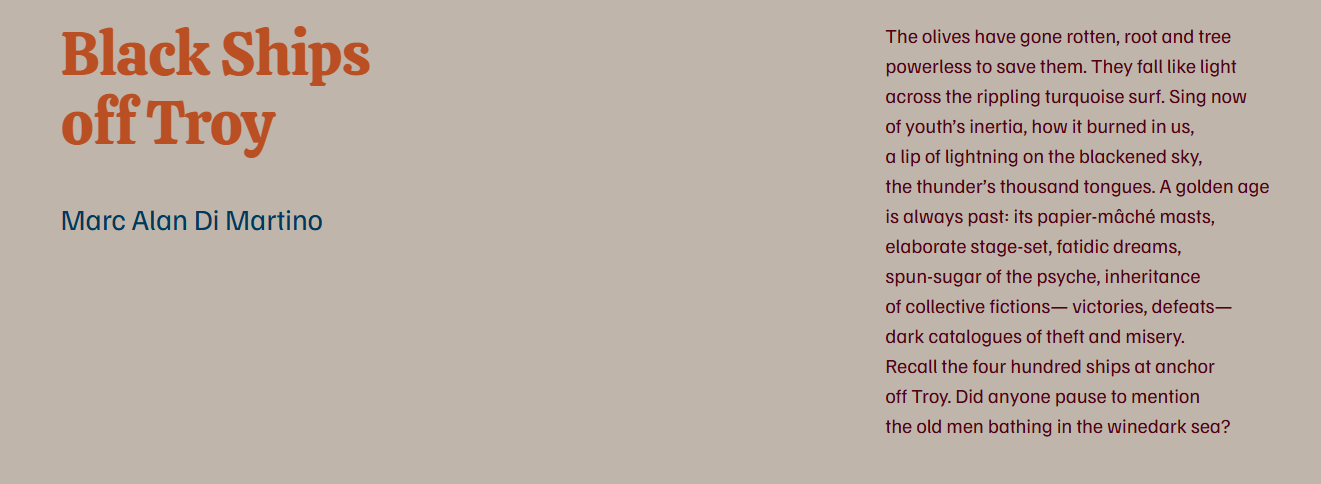
This is how I kept track of litmags at the end of the ’90s. [from the archives]

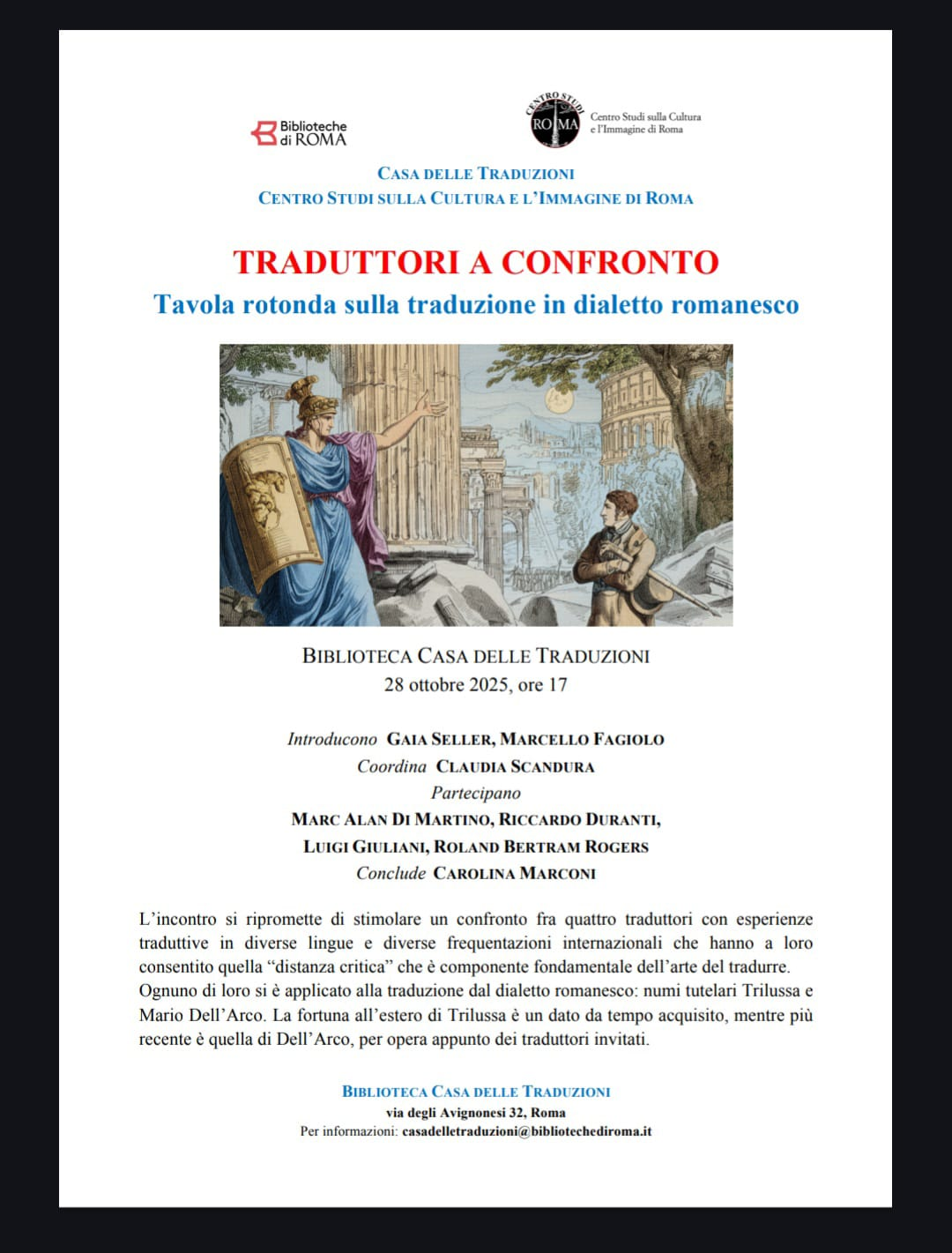
Happening today. Stop by if you’re in the neighborhood!

Here’s a little poetry update, as I have a few new poems up at some fine venues. “End of the World”, a recent translation of Mario dell’Arco’s “Fine der monno” (1947) is now up at Apple Valley Review. This is particularly significant to me, as I’ve been subbing them off and on since perhaps 2007 and this is the first time my work has been accepted.
Another poem, “Holes” – a demi-sonnet – is up at Shot Glass. If you’ve never heard of a demi-sonnet, here is the lowdown. Did I do it right?
“Dear Liz–“, an appreciation of musician Liz Phair’s album Exile in Guyville (1993) is up at The Shore. I was nineteen when that album came out and it’s one of a handful of records from my once-extensive vinyl collection to have followed me in my inter-continental wanderings.
Finally, a little political poem, “An Enemy Within” is up at One Art. One does what one can to resist the horrorshow. In any case, Do something.
*
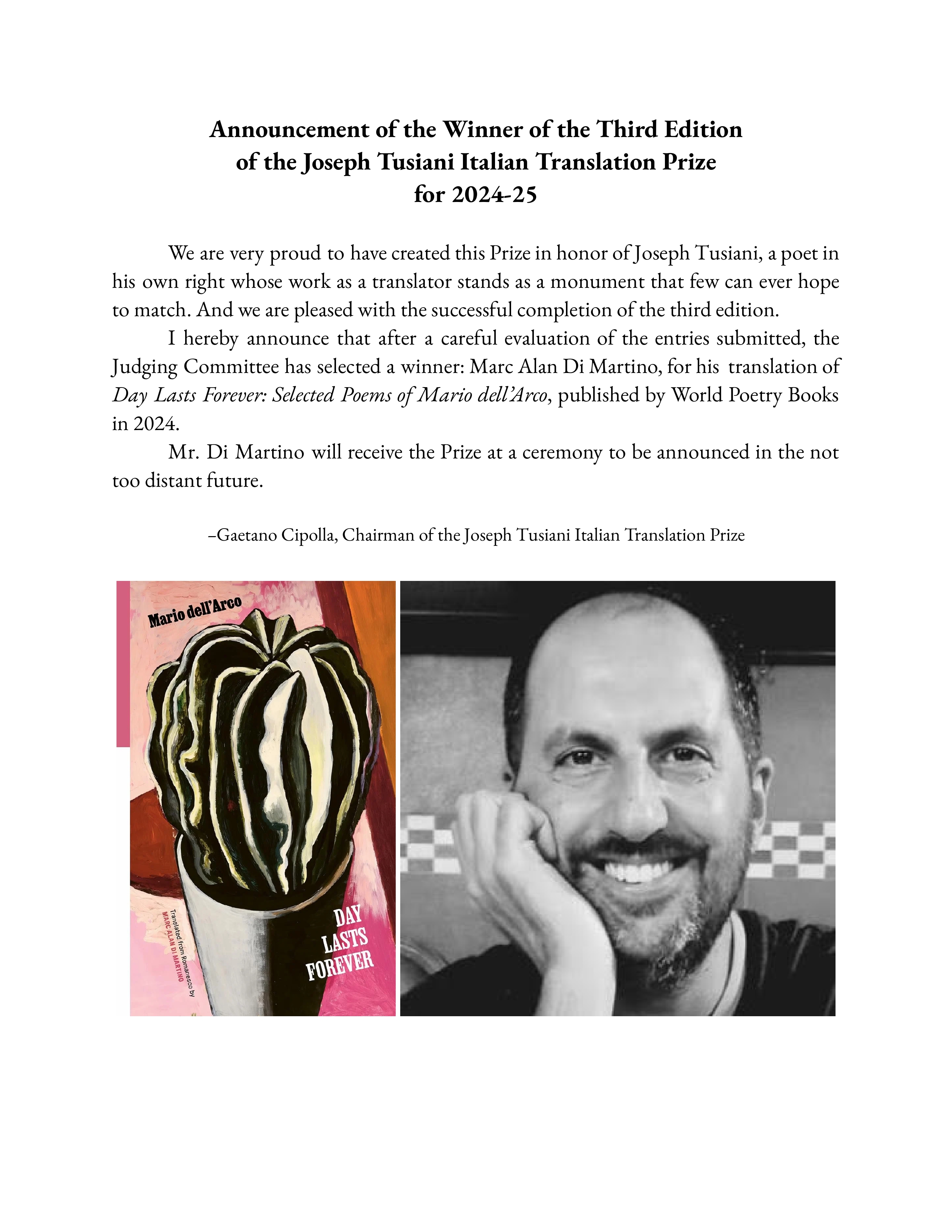
Day Lasts Forever: Selected poems of Mario dell’Arco is available from World Poetry Books.
I’m extremely pleased to have a poem in the current issue of the Shore. “Dear Liz—” is a little love letter to Liz Phair’s first album, Exile in Guyville (1993). The poem was originally a shape poem, but it didn’t really work and so – after a few years and a few rounds of modifications – it settled into its current mode as a haibun. The allusion in the last lines is to the rock critic Robert Christgau, who must’ve written something memorable about the Rolling Stones that insinuated itself into the fabric of this poem.
you had me at ‘Fuck and Run’, your parched voice
like husks of sweet corn under a dying
August sun—Silver Queen, the only kind—all
sturm und twang, slight lisp betraying a shyness
undercut by your half-exposed nipple on the album
jacket. You drove us wild at nineteen, tired
of guys like ourselves running everything, screaming
their emo angst in our ears.
[read the whole poem at the Shore]
Mario Fagiolo – later Mario dell’Arco – was an architect by profession in the 1930s. This week I was lucky enough to be able to visit his two main contributions to 20th century architecture, both done with his colleague Mario Ridolfi. (The two would have a falling out after the war. Fagiolo would subsequently abandon architecture for literature and change his name to Dell’Arco.)
The first, below, is the Fontana dello Zodiaco (Zodiac Fountain) in Terni, which is essentially a ‘space needle’ surrounded by mosaics of the zodiac. Terni isn’t a terrible enchanting city, as far as Italy goes; it was bombed heavily during WWII as it was a major site of arms manufacturing, and the fountain was damaged as a result. After the war, it was reconstructed. The fountain dates from 1932-36, a full decade before Taja ch’è rosso! – his first collection – was published.

The second is the Post Office in Piazza Bologna (1935) in Rome. It was night when I visited, so the photo isn’t great, but you can get some idea of its modernist lines.
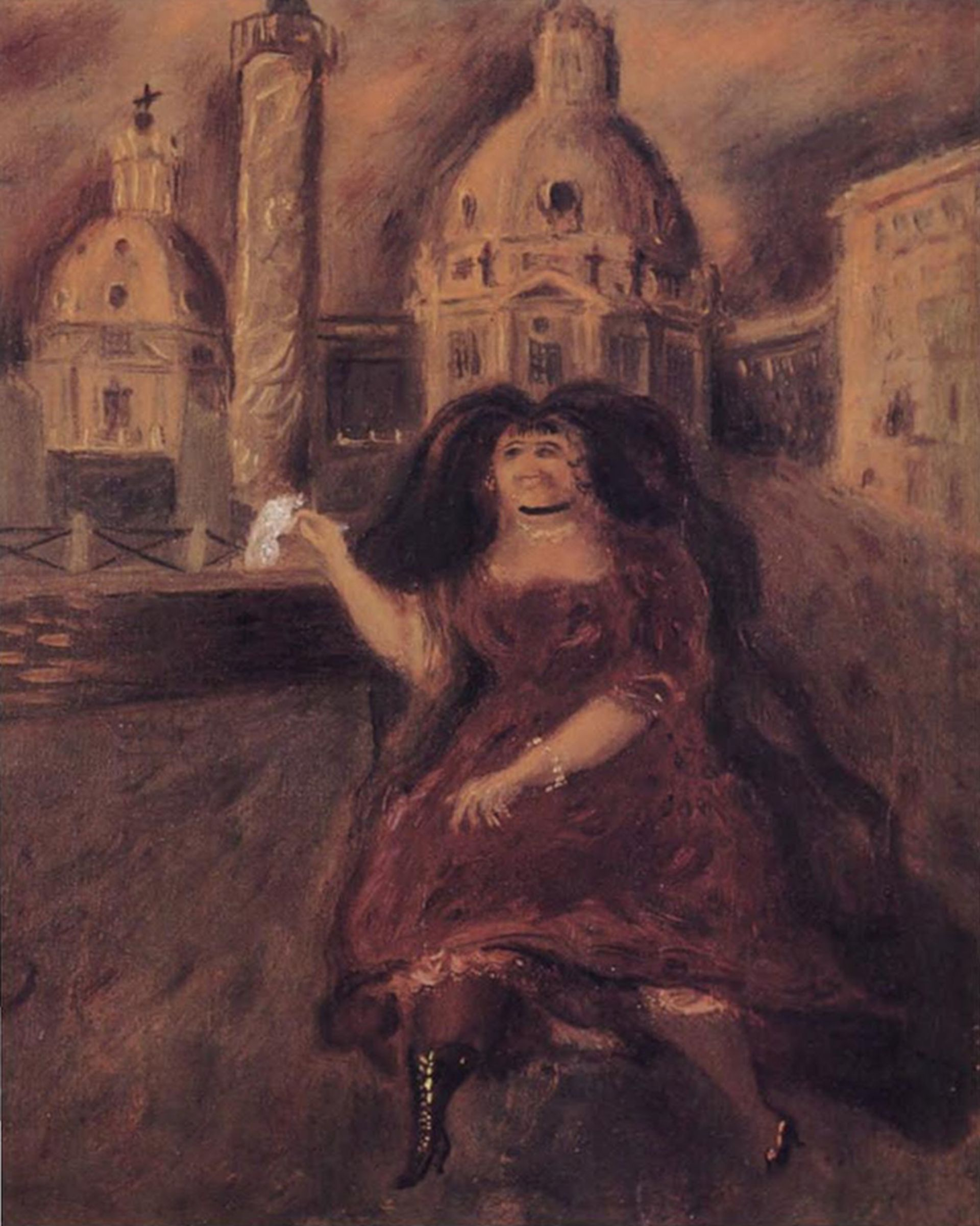
Architecture makes frequent appearances in Dell’Arco’s poetry, as one might expect. Even his nom de plume is a play on architecture: Dell’Arco, ‘of the Arch‘(itect). Here is one of my favorites, “Spiral Staircase”. The poem alludes to what in all probability is the spiral staircase of Bramante in St. Peter’s Basilica (below).
Day Lasts Forever: Selected Poems of Mario dell’Arco is available from World Poetry Books.
I joined Facebook in 2008. During Obama’s first campaign I was involved with a group of Obama supporters in Italy, and Facebook was new and hip and a great way to organize, especially for those of us living abroad. It felt like the future, and the future – like Obama – looked liberal, open and social.
Of course, that feeling frayed gradually, and broke entirely (for me, at least) in 2016. At that point Facebook, and less so Twitter – which I had joined in 2009, ever the early adopter – had begun to seem like a bar fight, the kind of place you go to get rowdy and bust a few heads and go home with a bloody lip and a black eye. And, of course, the next day you go back for more of the same. Only, the bar never closed and those throwing the barstools were often friends and family. It seems almost insane to me now, thinking back, but arguing was model behavior on social media. We were sold the idea that it was a public square where one was to spend one’s time debating everyone in one’s path in the name of free speech and democracy. And, for a while, I did. I debated religion and atheism, Israel and Palestine, Clinton and Trump, apples and oranges. I made allies and lost friends. I lost members of my family, as well. I stopped checking in to Facebook after the 2016 election and came back reluctantly years later, though never with the same fervor or sense of ease. It was no longer a place I felt like I wanted to be, and that feeling has stayed with me.
I’ve often been one step away from simply deleting my account, as I did with my Twitter/X account a year or two ago, a step which Facebook makes deliberately hard. I’ve been kept from doing that by virtue of the fact that I am ‘in touch’ with people in my life I’d otherwise surely have lost touch with by now. This was the original selling point for Facebook – other than a way to vote on who the hottest babes on campus were – and it remains the only reason I haven’t pulled the plug yet.
In the early days, you could ‘poke’ someone to let them know you were thinking about them. It was cute. Then came the news feed, which ruined everything. I refuse to read the news on Facebook to this day, even to click a link to a news story. You used to see what people you cared about – or were at least tendentially interested in – were up to. Now all I see is AI-generated garbage, pages they want me to follow because my profile says I like the Ramones or bagels or skateboarding, advertisements and posts by people I’ve never heard of before and have no connection with. They want to up my engagement, and I want them to stop it. This is basically what’s left of the experience for me.
Even when I post something like a new poem or a blog post the level of engagement is pitifully low compared to what it was in its salad days, when engaging with friends was the actual point of Facebook. One suspects that the only way to increase engagement is to engage, meaning unless one is constantly on Facebook ‘liking’ and commenting and sharing others’ posts, the algorithm will pay little or no attention to yours. I guess they want to discourage freeloaders, but I’m no longer willing to spend the necessary time and energy required to get any benefit out of it for myself, if that is even the right word. This principle seems to be true across social media, and it’s one reason I’ve grown tired of it. It doesn’t give me back anything I value, and has become mostly an old habit: post, like, comment, repeat.
I grew up before the Internet, and was already in my thirties when social media blew up. I remember a world without this stuff, when you just stared at the ceiling if you were bored or went outside to see who was around to play with. Of course, now all those kids in the street are on Facebook and I can see photos of their kids whenever I like, which is – paradoxically – almost never. That is, I am connected to them through Facebook, though my level of interest has decreased so much that it seems just being connected to them is the whole point, seeing their names and avatars, not actually checking in with them and exchanging messages. It feels like going to a party where everyone you know is and standing by the wall the whole time with a drink. And perhaps we are all standing by the wall with our drinks, ignoring each other. What a party, right?
Ten years ago I would’ve written this as a Facebook post, or ‘note’. It might have generated some comments and discussion, perhaps even a minor skirmish. And, of course, it would’ve disappeared along with the thousand other posts and tweets which are the constant chatter of social media, all flushed immediately down the toilet of the timeline. Today, if I need to write something down to find out what I think about it, I do it here. I own the bar.

This is not a post about poetry (for once), but pop music. I’ve been a devotee of the Velvet Underground since I first discovered them in college, and they have been more or less my favorite band my entire adult life. The first poem in my second collection Still Life with City is about a VU concert (“Live in Dallas”), and imagines the interplay between the band and the audience during performance. It was inspired by the Live 1969 album and Lou Reed’s semi-comical stage patter during the sets. So, I’ve been listening deeply to the Velvets for over thirty years and I think I may have made a discovery about “Sister Ray”.
I’m not an expert on pop music, and I haven’t read everything there is to read on the subject of the Velvet Underground or Lou Reed or the Sixties or anything of that sort. I just know what I know, y’know? “Sister Ray”, for those who don’t know, is a 17-minute song on side two of White Light/White Heat (1968), the Velvets’ second studio album and the last to feature John Cale. “Sister Ray” is notorious for taking the VU’s obsession with the wild side (“Heroin”, “Venus in Furs”) to its logical extreme, and recounts an ambiguous tale of a drugs-and-sex fueled orgy culminating in homicide reminiscent of the long scene in Hubert Selby, Jr.’s novel Last Exit to Brooklyn (1964). I picked up a copy of Selby’s novel while working at Strand (1995) precisely because I’d read that it had influenced “Sister Ray”, and it didn’t disappoint. (I immediately attempted my own versions of Selby-esque stories based on my own dissolute social life in mid-’90s New York, but they were predictably adolescent failures.) As well, the lyric “Who’s knocking on my chamber door?” is easily traced back to Poe’s “The Raven”. (Reed later released an entire album of Poe-inspired songs called The Raven in 2003.) I’ve always thought that when the police show up to bust the sordid soirée it may have been a reference to Chuck Berry’s “Around and Around” (“and when the po-lice knocked/both doors flew back” – Reed’s intonation of po-lice perhaps mimicks Berry’s), but that was a pretty commonplace trope in early rock-and-roll songs I think.
What has all this to do with Aretha Franklin, you ask? I’ve listened to many versions of “Sister Ray” on numerous bootlegs, some of them reaching the 40-minute mark (a “Sixty-Minute Man“, indeed), but the album version is the one ingrained on my consciousness. It’s extremely raucus with John Cale’s organ duelling with Reed and Morrison’s guitars for sonic prominence, and Reed’s vocals are often buried beneath the onslaught of noise. They can be indistinct or just plain unintelligible at times, leaping out like flames from a yule log before receding into the background, not unlike the way certain images come and go in your consciousness, perhaps pinging back and forth between the hemispheres. But I digress. Suffice to say the album version was the one I’ve always ‘known’. Yesterday I discovered another live version of the song from a 1967 show in NYC, as part of the WL/WH Super-Deluxe reissue (2013). As a completist, I’m late to the game. One can assume this is an early version of the song, recorded before or around the time of WL/WH, and it appears along with “Booker T“, ostensibly part of the same set. I’m just riffing here, mind you. But on this version the lyrics are clear and distinct, and Lou sings repeatedly “Just like Sister Ray says, ‘Sock it to me!'” and “Whip it on me!” When I heard that I, of course, thought of Aretha’s “Respect”, which popularized the phrase “Sock it to me!” in 1967, or thereabouts. Andrew Hickey goes into this on his his 500 Songs podcast in the episode on “Respect“. I listened to “Respect” after “Sister Ray”, then toggled back and forth for a while, and indeed Aretha even sings “Whip it to me!” which I’d never consciously heard before and which is repeated rapid-fire deep in the album cut of “Sister Ray” (“Whip it on me, Jim” it sounds like). On the live ’67 version, Lou repeats “Sock it to me” over and over, and when I compared it to the album version I noticed the phrase no longer appears in the most familiar recording of the song.
One further clue is that the name “Sister Ray” – who doesn’t appear as a character in the song, but is a kind of lurking presence of ambiguous sexual identity, a subject Lou dealt with regularly – could be “Sister Re” – that is, Aretha. Hickey explains that the line “Re, Re, Re, Re” in “Respect” was Franklin’s nickname (A-re-tha), and of course “sister” was a popular way to refer to Black women in the late ’60s (“Brothers and sisters!” is shouted in the intro to the MC5’s “Kick Out the Jams“, for example, showing how white rock musicians often borrowed terminology from Black culture to give themselves clout). Given that the Velvets were always very open about the influence of Black music on their own (Tucker loved Bo Diddley, Morrison T-Bone Walker and Mickey Baker, Reed doo-wop music, as sourced from Up-Tight: The Velvet Underground Story) is it hard to imagine they were listening closely to Aretha Franklin in 1967?* Not at all. Again, remember that the song “Booker T” – as in “Green Onions” – was recorded at the same show, or in the same period, confirming their habit of paying homage to the music they admired, their internalization of influence. Like all great rock-and-roll bands, they wore their influences on their sleeve.
So what is Aretha Franklin doing in “Sister Ray”? Maybe John Cale or Moe Tucker can answer this question with some accuracy, as they are still with us. My guess is that either it was a somewhat unconscious interpolation, the way the zeitgeist can impose itself on us in ways we don’t necessarily control, or perhaps Reed – who had studied writing with Delmore Schwartz at Syracuse and was a gifted storyteller (“The Gift“, also from WL/WH, is proof) was using techniques he’d learned from Selby and Joyce, a kind of stream-of-consciousness in which narration, dialogue and background detail are all squeezed together in a non-linear, surreal, textured way reminiscent of a cubist painting.
I like the idea that “Respect” is playing on the radio or the record player during the orgy scene, and in the drug-induced haze and confusion “Sister Re” gets superimposed onto “Sister Ray”, and the two eventually merge into one, much like the vocals and instrumentation create an organic, indivisible whole. The song feels more like an psychodrama than a pop song to my mind, which may be the most truly innovative quality of the Velvets’ music.
In any case, I’ll never hear either song quite the same way again.
* A few days after writing this I came across this article listing “Lou Reed’s 46 favorite songs of the 1960s”, which Reed apparently detailed before his death in 2013. Number 40 on that list is Aretha’s “I Never Loved a Man”, which is of course the title track of the album that features “Respect”. So he was definitely paying attention to Aretha Franklin while writing “Sister Ray”.

I’m always thrilled to have a poem at Rust & Moth, which has one of the most reader-friendly presentations of any litmag out there. This poem is called “Splitscreen: Skatepark” and attempts to capture some of the sweat and grit of the local skatepark on a fine summer’s day. I spent my teenage years in such places, and the scene drawn in the poem is largely a composite of those languid afternoons, including one more recent episode viewed from my current perspective as an adult skateboarder that prompted the poem itself. For those keeping score, it’s a sonnet written in rhyming couplets.

If you like skateboarding poems, I have a few more at Loch Raven Review.
I have a new poem at One Art. It’s neither a j’accuse nor a mea culpa, but an exploration. Be sure to click the link at the bottom of the page for context. Thank you to Mark and Louisa of One Art for accepting this one.