
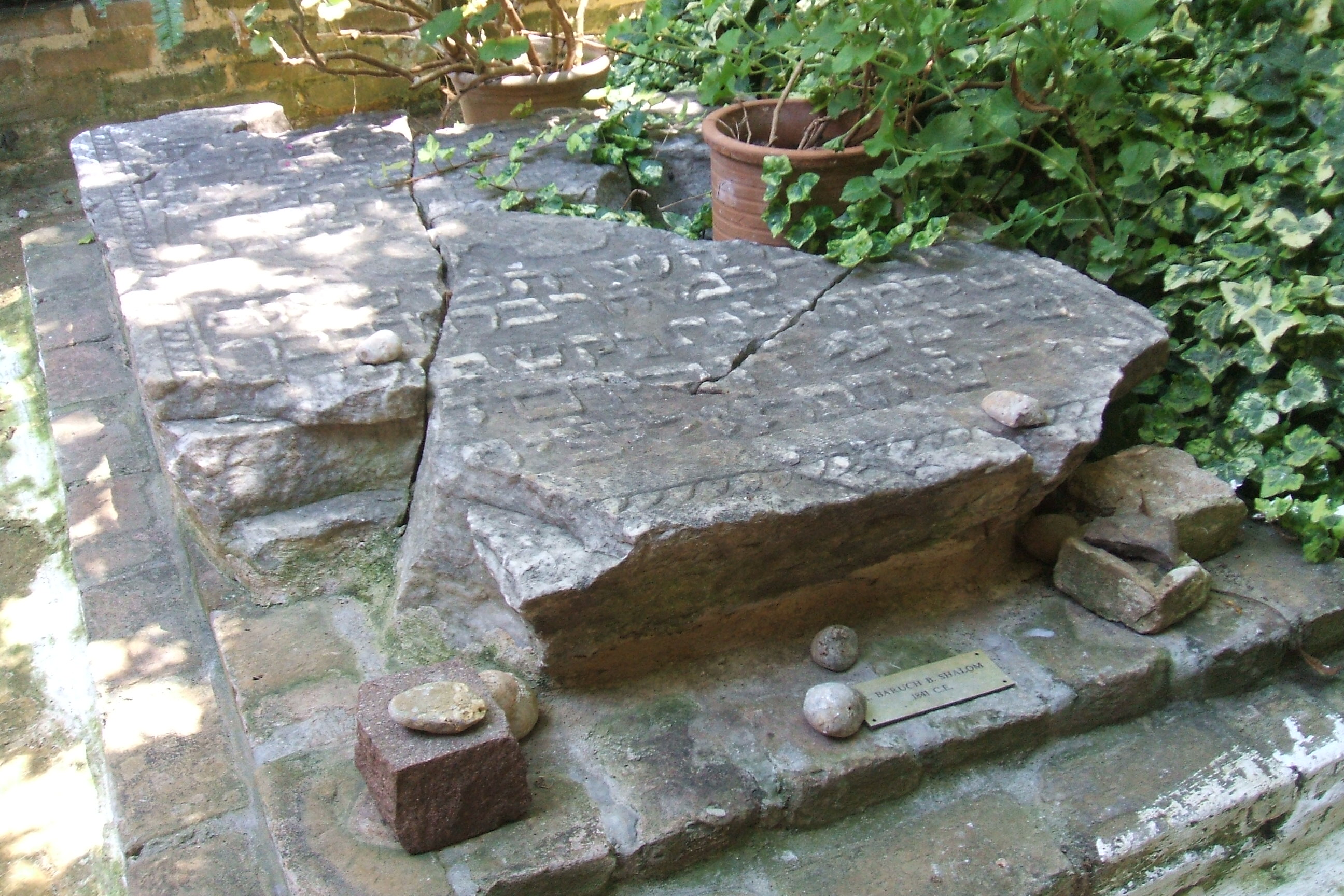

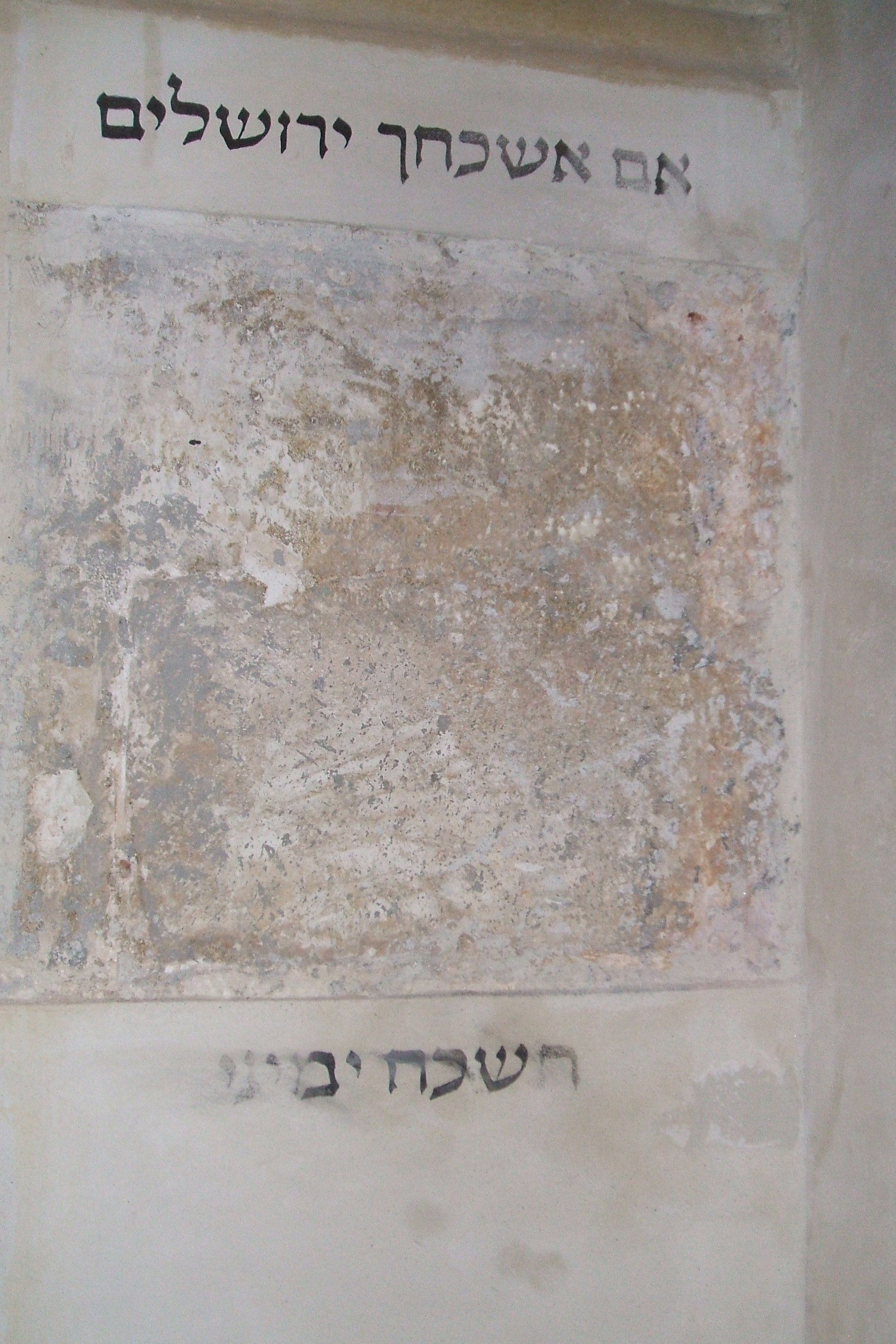
Summer ’08. Before the arsonists got to it.
Summer ’08. Before the arsonists got to it.
We visited this synagogue, Etz Chayyim, on our trip to Crete in 2008. It was a beautiful, tranquil, unpretentious place open to the public. Apparently, they used to boast that it was one of the last Jewish buildings in Europe (or elsewhere, for that matter) without 24/7 surveillance. This will change, of course, once they get the synagogue up and running again.
There aren’t many Jews in Crete. Most Greek Jews live in Athens. And there aren’t many of them there, either. Why anyone feels threatened by Jews is a mystery to me; why anyone feels threatened by a reconstructed synagogue (it had been used as a pigsty until the 1990s) is an equal mystery. The BBC reports.
Here is an excellent interview with David Aaronovitch, author of Voodoo Histories, in Salon.
What makes us susceptible to conspiracy theories?
We want to believe theories that contradict the idea that young, iconic people died senselessly. If a story takes away the accidental from their death, it gives them agency. After the JFK assassination, it was unbearable to many people that they could live in a country where a lone gunman could kill a president. In those circumstances, it’s not surprising that an overarching conspiracy theory emerges. It suggests that somebody is in control, rather than that we’re at the mercy of our neighbors and to some extent of ourselves (as was the case with Marilyn Monroe and Princess Diana). It’s the urge to make sense of a particularly traumatic moment.
In some ways, it’s not that different from the impulse to believe in God.
It is deep down a leap of faith, but it doesn’t present itself as a leap of faith. It presents itself as not only rational but a better kind of rationality. It’s incredibly important that a conspiracy theory has the appearance of science. The literature on Kennedy is beyond voluminous. It’s absolutely enormous. There are vast tomes to suggest that the CIA did it, or other people did. [Conspiracy theorist] David Ray Griffin has come out with a half dozen 9/11 books, and all of them have hundreds of footnotes. They’re either to instant news reports that have since been contradicted, or to other conspiracy theories — but the work nevertheless takes on the appearance of scholarliness.
Aaronovitch also has a blog called AaronovitchWatch, a nod to all the paranoids out there. How long until AaronovitchWatch Watch pops up in a search?
A shout goes out to Agnostic Mom for this cool chart:

The other day I met up with some friends from out of town. They were in Rome for the day to get their two-month-old daughter’s citizenship papers at the American Embassy. Rob is American and Anna is Italian. They met in Nepal, where they were both stationed while working for various transnational employers. They married in Italy, and their daughter Clara was born in Perugia. In a few weeks she will be returning to Nepal, where she will spend the first few years of her life.
“She’s lucky,” I posited. “Being born with dual citizenship will make life easier for her.” They both smiled.
Anna explained that Rob would be eligible for Italian citizenship even if he never actually lives in Italy. She, on the other hand, would have to spend three years in the United States before being able to apply for U.S. citizenship.
“Go for it,” I told Rob.
“Think it’s worth it?” he asked.
Worth it? “Maybe not for Italy, but for the rest of Europe it is.” I couldn’t believe the words had come out of my mouth. Read more…
Yiddish poet Abraham Sutzkever’s death was overshadowed by the death of J.D. Salinger. The New York Times wrote about both; the New Yorker only wrote about Salinger, as far as I know. Sutzkever was 96 years old. He was born in Siberia, fought in the Vilna ghetto, and lived out his years in Israel writing his poetry in Yiddish. I did my own translation of a beautiful lyric of his, and if the right mood strikes me I may attach it to another post. Sutzkever was a wonderful poet and deserves to be read. Unfortunately, there is not a great deal available in English.
If your eyes can stand it, you can read some of it here.
Here’s a list of some really nice people who also happen to be totally, unabashedly godless.
Here is one of the nice, cuddly atheists elaborating on her views and her book. Her name is Jennifer Michael Hecht, and she’s very interesting. (And really nice, too!) Part 1 of a 4 part interview with Point of Inquiry:
Susan Jacoby has a new column at the Washington Post called The Spirited Atheist, which seems to be a continuation of her On Faith contributions under a new moniker. Today I made my routine visit to read what she’s written, and found this wonderful reflection, 5 Myths About Atheism. Here’s number 5:
As an atheist, I highly doubt that my subjective experience differs qualitatively from that of a religious believer who thrills to Bach’s Goldberg Variations, Michaelangelo’s David, Leonardo’s Adoration of The Magi, or, for that matter, the immensity of a night sky. I do not have to believe in God, or any supernatural entity larger than myself, to feel overwhelming awe upon holding a newborn baby or upon experiencing the reciprocal, passionate love that comes rarely–the kind of love, as Nietzsche observed, that “compels me to speak as though I were Two.” But I do interpret these experiences differently from a believer, because I do not ascribe any mystical or supernatural character to them. Such transcendent experiences do not make us greater than ourselves; they help us realize our best selves–the best of which our species is capable.
 Read the full interview here.
Anyone paying attention in the last decade or so – at least since Sept. 11, 2001 – must have noticed the rise of public atheism. Atheist blogs, websites, and associations such as the Out Campaign have sprung up seemingly out of nowhere, all emphasizing the need to speak about religion openly and without filters. In London and New York, atheist associations have even bought advertising space on city buses to promote slogans like, “There’s probably no god. Now stop worrying and enjoy your life.”
The Italian Union of Rationalist Atheists and Agnostics (UAAR) is the only association in Italy dedicated to the rights of the non-religious and the promotion of a secular worldview. The association was born in 1986, with the objective of defending the rights of non-believers and the secular nature of the State. Their campaigns include Debaptism Day (for baptized Catholics who wish to legally separate themselves from the Catholic Church) Darwin Day (a celebration of science and reason), and the removal of crucifixes from public classrooms. In November 2009, the European Court of Human Rights in Strasbourg ruled that the presence of the crucifix violates the religious and educational freedom of children. The UAAR was behind this campaign, and helped win a decisive victory.
The rising number of non-believers going public inevitably invites a backlash from more traditionalist quarters. Politicians like Ignazio La Russa and Silvio Berlusconi have publicly declared their contempt for the separation of church and state. Pope Benedict XVI regularly admonishes non-beleivers with heavy-handed phrases like “loss of dignity,” calling those without God “alienated from themsleves.” Atheists are labelled “christophobic.” Cardinal Murphy O’Connor, in a defamatory video since removed from YouTube, asserted that “atheists are not fully human.” The tendency is toward defamation, to make the atheist look like an outsider, the humanist somewhat less than human. It is in this climate that atheists, secularists and humanists have begun to speak up and defend their rights. Raffaele Carcano is the Secretary of the UAAR and co-author (with Adele Orioli) of Uscire dal Gregge (Leaving the Flock), Luca Sossella Editore 2008.
From UAAR (doctored by Google Translator):
Education Minister Mariastella Gelmini, a tireless advocate of the Christian roots of our country (Italy) and the presence of the crucifix in classrooms, working for months in an attempt to prevent the development of alternative activities to the teaching of the Catholic religion, got married today in Sirmione del Garda. The ceremony took place shortly after midnight in a civil ceremony (the groom is divorced). The Town Hall opened for the occasion. The bride is in the sixth month of pregnancy. The wedding was attended by two key members of a government that does not fail to underline its harmony with Catholic morals: Prime Minister Silvio Berlusconi (already divorced, and currently requesting a further separation), and the Minister for Cultural Property Sandro Bondi (separated).
 Marc Di Martino