Mario dell’Arco as Architect

Mario Fagiolo – later Mario dell’Arco – was an architect by profession in the 1930s. This week I was lucky enough to be able to visit his two main contributions to 20th century architecture, both done with his colleague Mario Ridolfi. (The two would have a falling out after the war. Fagiolo would subsequently abandon architecture for literature and change his name to Dell’Arco.)

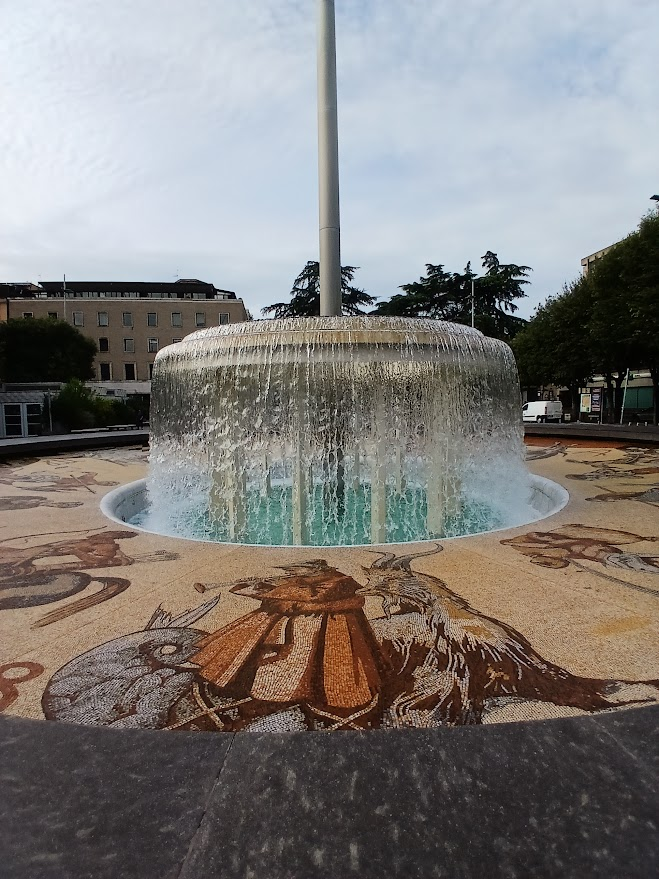
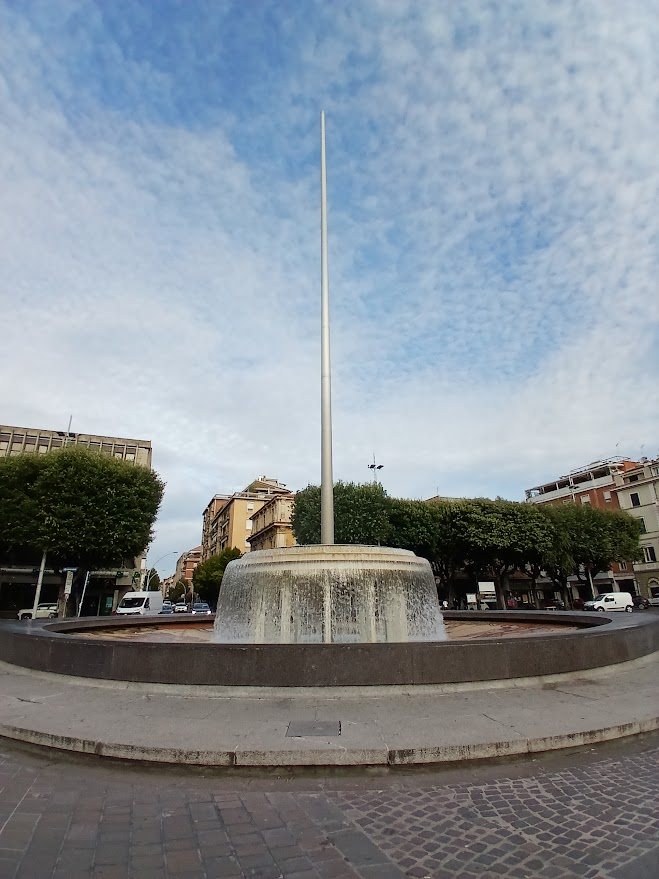
The first, below, is the Fontana dello Zodiaco (Zodiac Fountain) in Terni, which is essentially a ‘space needle’ surrounded by mosaics of the zodiac. Terni isn’t a terrible enchanting city, as far as Italy goes; it was bombed heavily during WWII as it was a major site of arms manufacturing, and the fountain was damaged as a result. After the war, it was reconstructed. The fountain dates from 1932-36, a full decade before Taja ch’รจ rosso! – his first collection – was published.

photos by the author

The second is the Post Office in Piazza Bologna (1935) in Rome. It was night when I visited, so the photo isn’t great, but you can get some idea of its modernist lines.

photo by the author

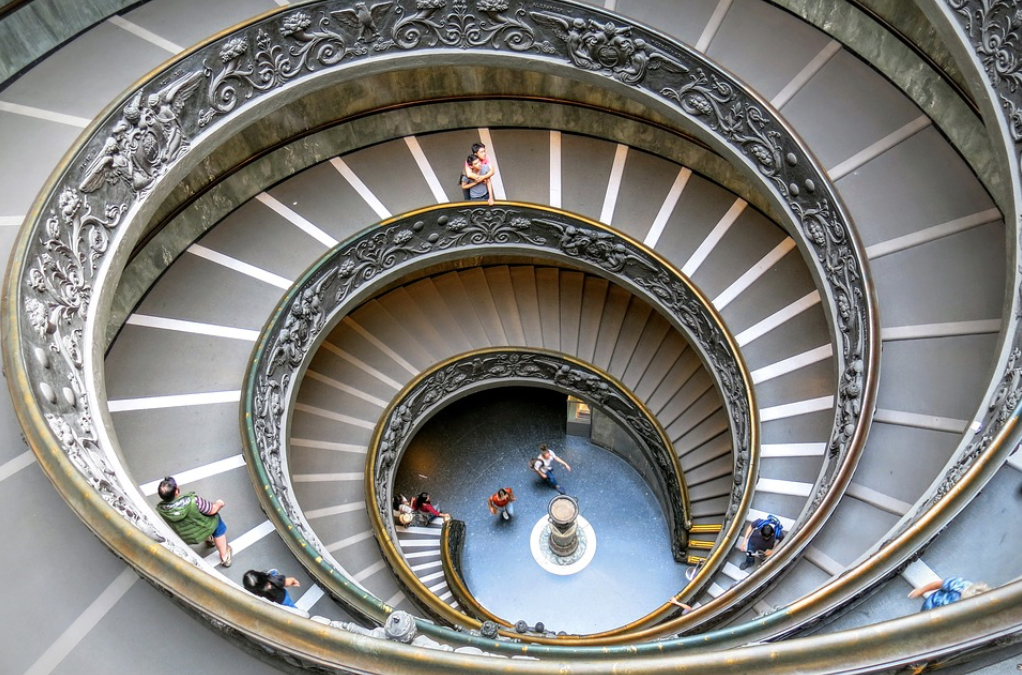
Architecture makes frequent appearances in Dell’Arco’s poetry, as one might expect. Even his nom de plume is a play on architecture: Dell’Arco, ‘of the Arch‘(itect). Here is one of my favorites, “Spiral Staircase”. The poem alludes to what in all probability is the spiral staircase of Bramante in St. Peter’s Basilica (below).

translation by the author

Day Lasts Forever: Selected Poems of Mario dell’Arco is available from World Poetry Books.

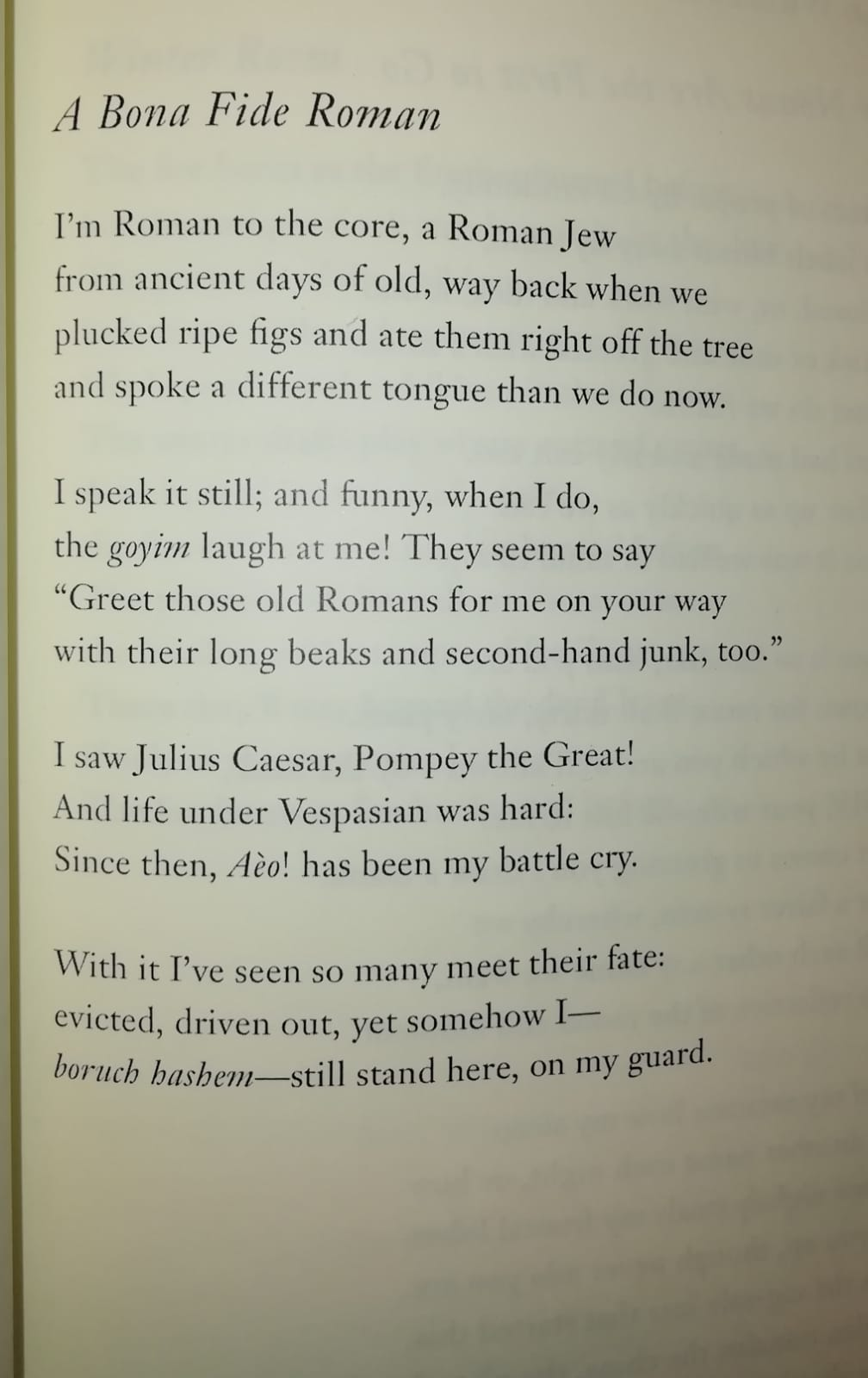
Two Poems by Crescenzo Del Monte

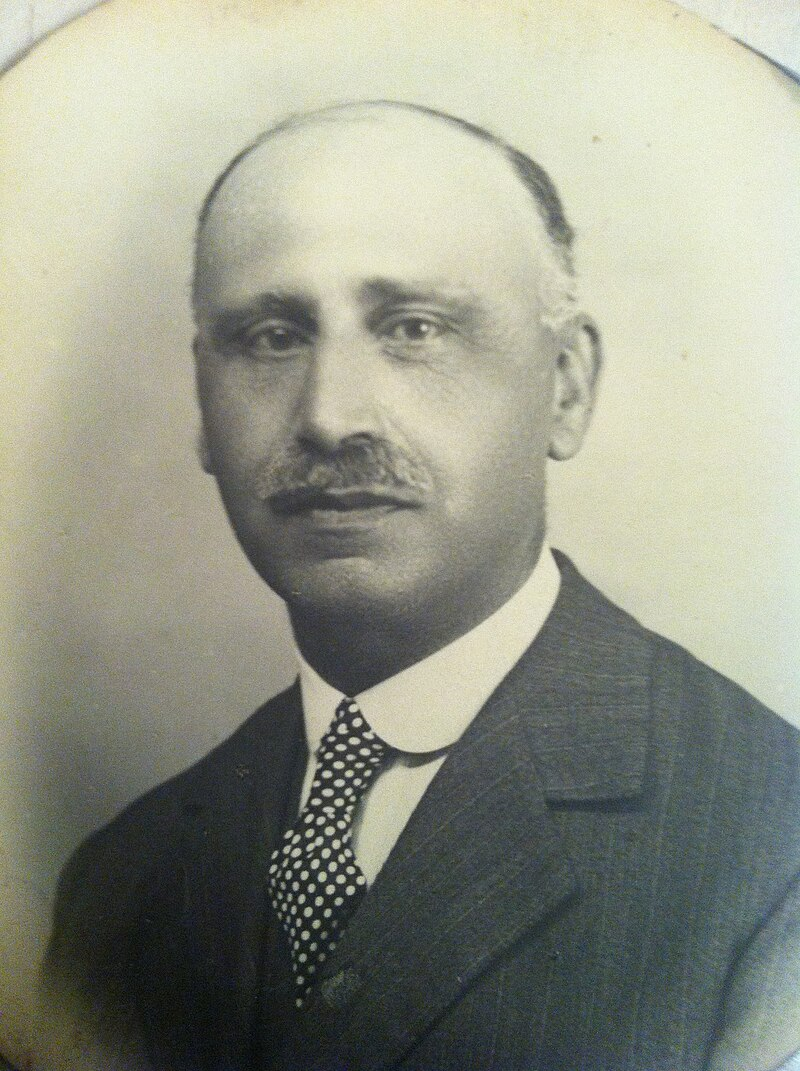
Crescenzo Del Monte 1868-1935

What I enjoy most as a translator is bringing poetry or poets to the English language for the first time. I have enormous esteem for the many translators of Dante, Belli, Montale and other Italian poets who have benefited from the efforts of a multitude of translators. Each new translation offers up a slightly – or drastically – different take on the same poem or author. Taken together, they create a composite portrait of the original work, not unlike reading multiple biographies of the same person written from different perspectives and points in history. But there are so many important voices still lurking in the shadows of literary history, stalking the margins, and that’s where I like to spend most of my time.

Much of my translation work has dealt with the poetry of Mario dell’Arco, a poet almost completely unknown in the English-speaking world a quarter century after his death. He is not much better known in his native Italy, or even in Rome, his birthplace. This despite the fact that he had a six-decade long career, published dozens of collections of original verse as well as versions of classical Roman poets like Martial and Catullus, and wrote books of prose including biographies of his Romanesco predecessors Belli and Trilussa. The point being, I noticed a gaping hole in the literature and made a conscious effort to fill it. My hope is that others may take up the gauntlet and try their hand at Dell’Arco, adding something to the portrait I’ve begun to sketch into English of this great poet’s work.

What has any of this to do with Crescenzo Del Monte, you ask? Well, Del Monte is another poet who has gone the way of the dodo, to put it bluntly. Yet he is arguably one of the five major Romanesco poets: Belli, Pascarella, Del Monte, Trilussa and Dell’Arco, in order of birth. Del Monte differed from the others in that he was Jewish, and wrote in Giudaico-Romanesco, the dialect of Roman Jews. He was a versatile writer who wrote in Romanesco and Italian as well, and did many translations of others’ work into Giudaico-Romanesco, such as a version of the first canto of Dante’s Inferno.

Like Belli, Del Monte can be forbidding because of his meticulous renderings of his characters’ actual speech patterns, as can be seen in “O’ ‘nvitato a pranzo” (below), and the surfeit of Hebrew words which are often half-masked through transliteration (chalomme is the Hebrew word for ‘dream’, ื—ืœื•ื, pronounced chalom). Also like Belli, he offered up copious notes to his poems; practically every one has a glossary of terms to help the reader along. He knew it wouldn’t be easy, but he was preserving a world in his work, a world that now exists encoded in the poetry he wrote between the destruction of the Roman ghetto and the Fascist racial laws. (To hear a reading of Del Monte’s “La Cena de Purimme” – “Purim Dinner” – which bears a close resemblance in both theme and language to “The Lunch Guest”, including the same rhyme of chalomme/makomme, click here.)

I was lucky enough to have been able to study Hebrew in at the Jewish Cultural Center in Trastevere as well as in the ghetto, where for a time classes were being held in the local bookshop, Menorah. I’m by no means fluent, but I have enough of a grasp on the language and its historical-cultural milieu that I can find my way through the jungle with a candle and a machete.

As far as I know, there have been no other translations of Del Monte’s work into English. If I’m wrong, please reach out and let me know! Sgrรนulla!

Published in Packingtown Review.

*an alternate ending to the above poem – one more faithful to the original – might read: A cup of coffee and then nighty-night/tomorrow it’ll end up in the toilet.

Published in THINK

*line 8 of the above poem should read “with your long beak…”


Day Lasts Forever *Longlisted* for the 2025 PEN Award for Poetry in Translation

This is exciting!

Day Lasts Forever at the Biblioteca Nazionale di Roma – March 12, 2025

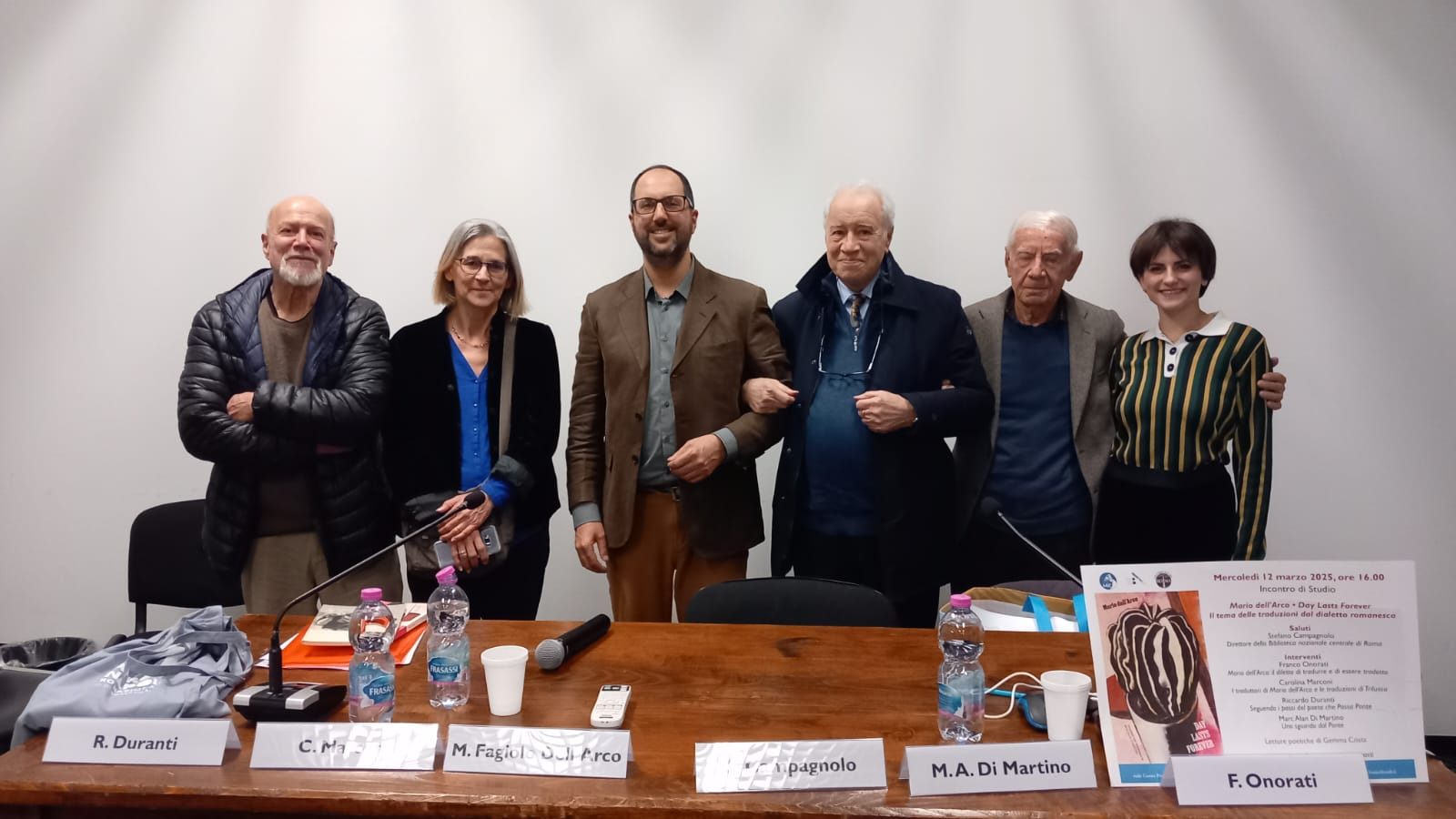
L to R: Riccardo Duranti, Carolina Marconi, me, Marcello Fagiolo dell’Arco, Franco Onorati & Gemma Costa

Mario dell’Arco was born in Rome on March 12, 1905 in Via dell’Orso, not far from Piazza Navona. Last Wednesday would have been his 120th birthday. We spent it at the Biblioteca Nazionale di Roma (National Library of Rome) in Castro Pretorio, celebrating his poetry and his life. Ostensibly, much of this was also a celebration of Day Lasts Forever, which has the distinction of being the first book of Dell’Arco’s work to be translated into English or, to my knowledge, any other language. This has been cause for some celebration among the Romanisti – scholars and enthusiasts of Romanesco and its culture – as Dell’Arco was the last of the “four greats” of Romanesco poetry – Belli, Pascarella and Trilussa being the other three according to no less an authority on the subject than Leonardo Sciascia – to have ‘crossed the bridge’ into English.

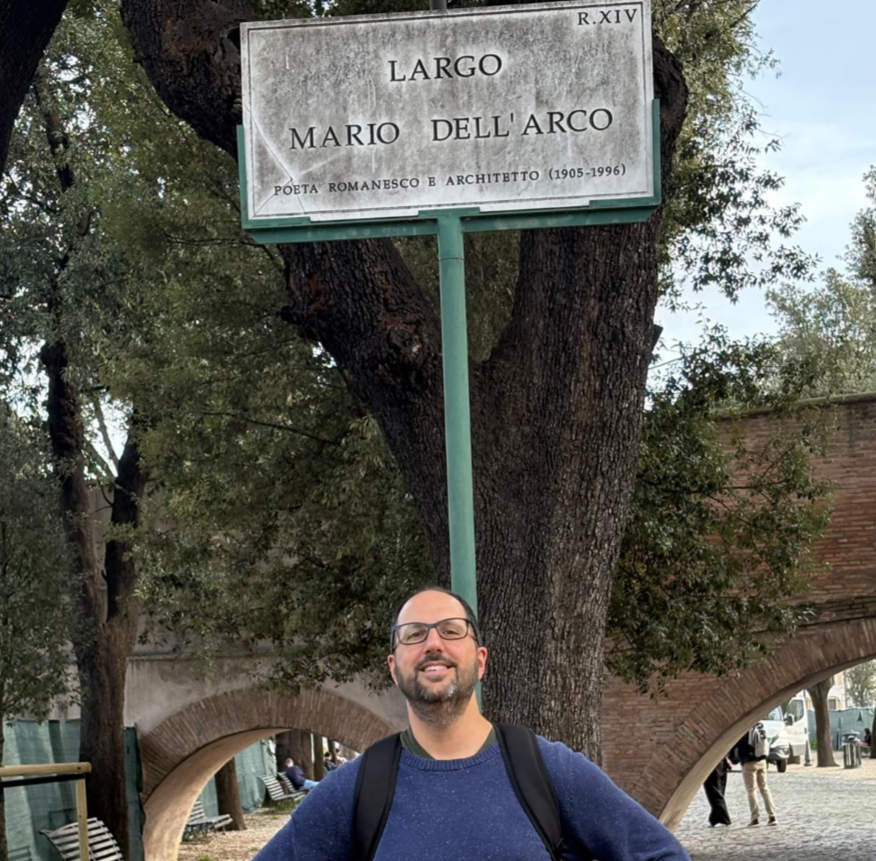
I am honored to have been invited to participate in this conference, hosted by Marcello Fagiolo dell’Arco, the poet’s son. My co-presenters are all accomplished scholars of Romanesco poetry – and Dell’Arco’s work in particular – who have been doing incredible work for decades to get him the recognition he deserves, including erecting commemorative plaques in Via dell’Orso (above) and at Castel Sant’Angelo (below), where a section of the gardens now bears his name.

When I began reading and translating Dell’Arco’s work, I spent most of my time in a vacuum. I had no inkling any of this existed outside of a few books published for his centenary. Suddenly, now it feels like it must have felt for Dorothy when her house landed in Oz; the world has gone from black-and-white to Technicolor in a very short time.

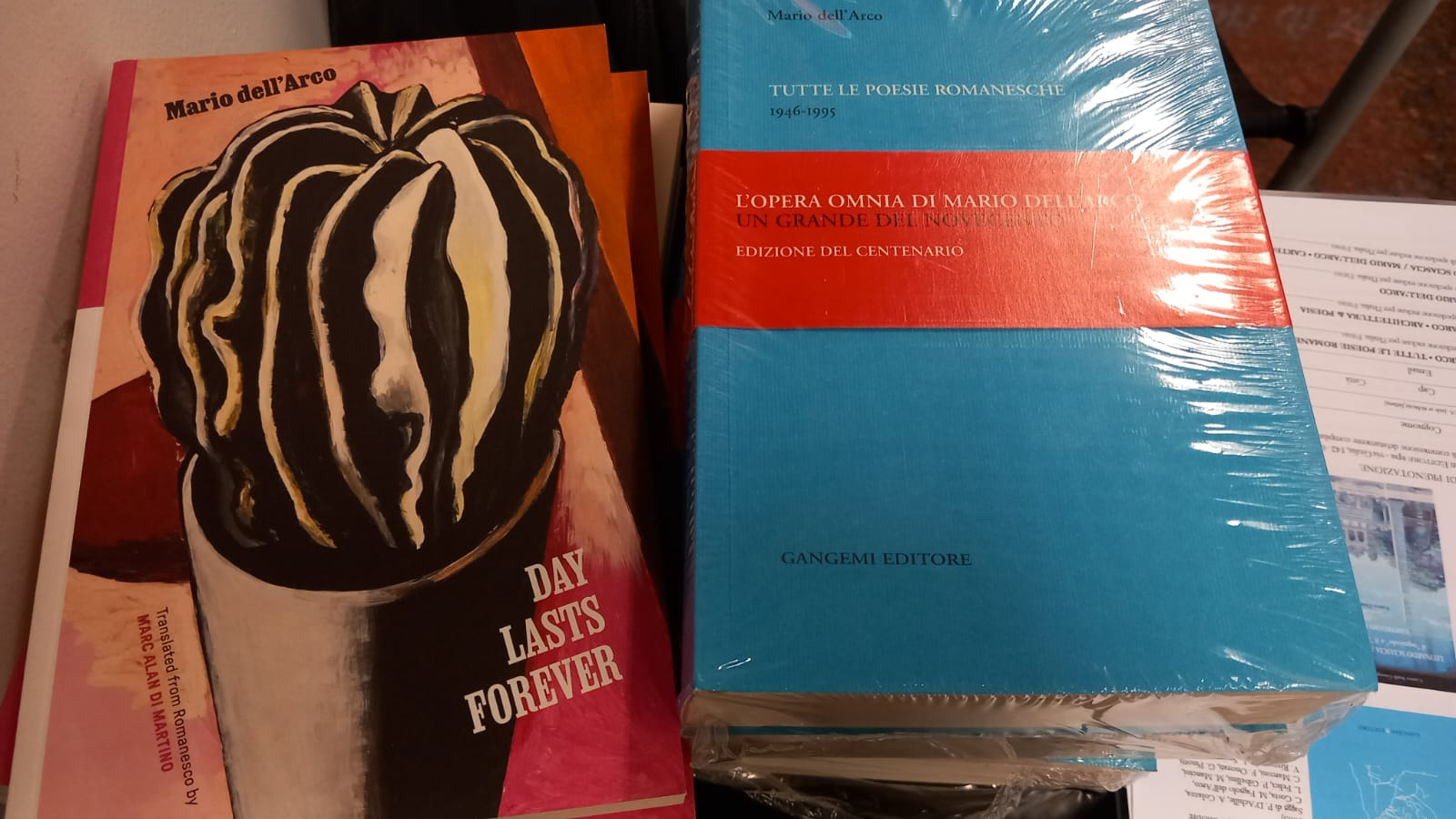
Day Lasts Forever, side-by-side with the opera omnia

There is so much I could say about the event. Each presentation was distinct and rich in detail, ranging from a biographical portrait of his father and the deeply personal nature of much of his work (Fagiolo dell’Arco) to the playfulness of Dell’Arco’s encounters with the Latin poets Martial, Catullus and Horace, which he ‘Romanescoed’ (Onorati), to the second lives of Dell’Arco and Trilussa in translation (Marconi) and reflections on the art of translation (Duranti). My contribution was an essay I wrote in Italian – no ChatGPT – about my experience discovering Dell’Arco’s work and attempting to usher it to the other side of the Atlantic by hook or by crook. The curious reader can listen to the entirety of the presentations, where they were recorded and archived for posterity by Radio Radicale (click image below). The presentations are, of course, in Italian with readings of Dell’Arco’s Romanesco poems by the wonderful Gemma Costa and in English translation by Riccardo Duranti and myself. (You can click on the names in the sidebar to skip to the English-language content if you wish.)

As an added bonus, my sister filmed a couple of videos of me reading my translations of the poems “I Built a Wall” and “Heads or Tails?”. You can read selections from the book here.

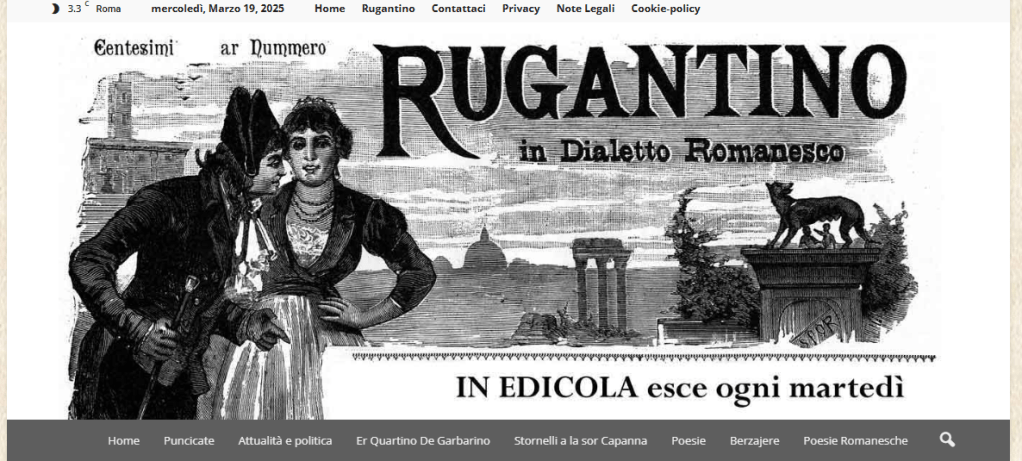
Finally – and I could go on! – the event received a write up in Rugantino, a satirical paper published in Romanesco, founded in 1848 with the newly won freedom of the press (click image below). Bbona lettura e bbon ascolto!

Monica and I with Dell’Arco’s writing desk in the Spazio ‘900.

If you’d like to order Day Lasts Forever – Selected Poems of Mario dell’Arco, click this link or pester your local bookseller into ordering it.

Day Lasts Forever Reviewed in RHINO

Anthony Madrid has written a review of Day Lasts Forever for RHINO. This is the fourth review so far and the third in the month of February! Madrid has this to say:

This is my kind of thing. Seventy-one poems, all but one, this big: [pincer fingers emoji]. I just checked: almost every single poem is five lines. Many are four. Soโ€ฆepigrams!

Yes, epigrams! and some other things like short lyrics about cats and wine as well as laments for the loss of loved ones. Many of the poems are indeed five lines, though some push seven or eight lines. The thing to notice is just how much Dell’Arco packs into those few lines, a dense imaginative space. Madrid happily quotes five poems in full, and still manages a brief review. He takes issue with one poem, a translation of a translation of Martial. It’s fair game. Read the poems and decide for yourself.

Day Lasts Forever: Selected Poems of Mario dell’Arco can be ordered from World Poetry Books or from you finest local booksellers.

Day Lasts Forever Reviewed in Asymptote

Jason Gordy Walker has written a perceptive and insightful review of Day Lasts Forever for Asymptote. He gives a nice general summation of Dell’Arco’s themes:

Across the collection, many themes abound: the art of laziness, the nature of language, good architecture and the weather, the moonโ€™s propaganda strategy, the heart of the scarecrow or the sunflower or the sundial, Jove and the deadly sins, the importance of lifeโ€™s simple pleasures, self-isolation and the longing for reconnection, the absurdity of the artistโ€™s life, watermelons and summer nostalgia, the history of Rome, light and darkness, a few unique felines. . . Is there hunting? Yes: some birds get shot. Is there wine? Plenty.ย 

What’s not to like? Walker concludes with what I take as the highest praise:

As such, this modest, rewarding selection from a vast corpus should be required reading for any serious student of translated poetry, and [Mario dell’Arco]โ€”honorably resolute in the dissemination of his Roman dialectโ€”ought to be placed on the shelf next to Italian legends like Italo Calvino and Eugenio Montale.ย 

Click on cover to order from World Poetry Books.

Iโ€™m not sure if this is a book, a butterfly, or a handful of angels. PIER PAOLO PASOLINI

Day Lasts Forever at the National Library of Rome

On March 12 – Mario dell’Arco‘s 120th birthday – I will take part in a presentation at the National Library of Rome with Marcello Fagiolo dell’Arco, Franco Onorati, Carolina Marconi, Riccardo Duranti & Gemma Costa on the topic of poetic translations from Romanesco. Below is the flyer for the event (in Italian). It is a great honor to be invited to speak about my experience translating the poems of Mario dell’Arco. If you’re in Rome or environs, feel free to drop in!

Day Lasts Forever in the TLS!

Well, it’s been a week with all the mishaguss in the US, the horrible tragedy on the Potomac and so much other madness around the world. I think when something nice happens it’s a good idea to share it. This really surprised me – I wasn’t expecting to Day Lasts Forever to get reviewed in the Times Literary Supplement! The review is quite enthusiastic, almost as if Mario dell’Arco is a super fun poet to discover. (Which he definitely is!) In fact, the reason I committed to translating his poetry was so that other readers could discover him the way I did so many years ago in a secondhand bookshop in Rome. He put a smile on my face, and got me thinking – an irresistible combination in a poet. Here is a taste of the review:

You can read sample poems from the book here.

Mario Dell’Arco

No, I haven’t stopped blogging. But I do have a life. Among the many things I manage to pack into the twenty-four measly hours of a day, I translate poetry. Since I’m working on a manuscript, the blog logically goes on the back burner. And since nobody reading this has probably ever heard of Mario Dell’Arco, here is a sample of his work. This and about ten other lyrics were published in the Autumn 2009 issue of the Journal of Italian Translation. Go buy a copy.

Diffidenza

Giove compie mill’anni, e l’animali
je porteno er cadรฒ.
La serpe striscia co una rosa in bocca
e Giove: – Cocca, accetto li regali;
ma da una serpe, e da la bocca, no.

Diffidence

At Jove’s one-thousandth birthday bash
the animals paid their respects.
The serpent brought him a rose. Jove quipped:
– That I love presents everybody knows;
but from the snake, and from its mouth,
that gift I can’t accept.