We have a convicted criminal in the Oval Office, surrounded by a cabal of oligarchs and sycophants making up a kakistocracy – government by the worst people. Not a day goes by when I don’t ask myself how we got here a second time, and if we will collectively make it to the other side of whatever this is. It’s in such times that the power of art and literature reveals itself more fully, becoming a way to cope with the encroaching darkeness and find a way through the muck.
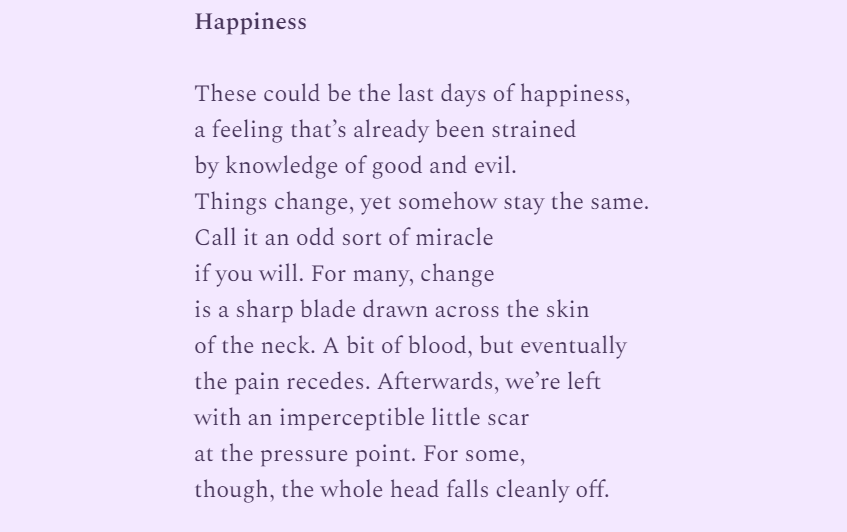
I have a sheaf of new poems at Judith Magazine, titled “A Failed Synonym for Love”, with a heartfelt introduction by editor Rachel Neve-Midbar, poet and translator of the poems of Vilna ghetto partisan and Israeli poet Abba Kovner. “Happiness”, was written just after the 2024 election. As an added bonus you get to read about how much I love bagels and lox!
No one can predict how bad things will get before they begin to get better again. Everyone must find their own way to resist evil: taking to the streets, calling their congresspeople, practicing everyday human decency – all of these counter the effects of malaise and disempowerment they’d like us to feel. “An artist is an artist”, as the recent song by Skunk Anansie goes, “and they don’t stop being an artist ‘cos of you, you know.” Rise up. Shteyt af!
Who Will Write Our History? Emanuel Ringelblum, the Warsaw Ghetto, and the Oyneg Shabes Archiveby Samuel D. Kassow
Milk can
This book almost defies description. It is as much a biography of the historian Emanuel Ringelblum as it is a history of the Oyneg Shabes, a resistance group in the Warsaw ghetto whose self-appointed mission it was to document life under Nazi occupation. The probability of their endeavor ever seeing the light of day was very small indeed. Only a few people involved in the group—originally composed of dozens of historians, economists, poets, and sociologists—survived the war. The only one who knew where to dig up the buried archives from the rubble of the destroyed ghetto saved himself by jumping from a train bound for Treblinka . Had he, too, perished it is likely that the entire archive would have been lost—as part of it still is—beneath the modern city of Warsaw.
The archive consists of documents of every type: diaries, interviews, historical and sociological studies, poems, photographs, children’s art, candy wrappers. The idea was to leave a record of what the contributors increasingly understood to be a lost civilization—that of Polish Jewry. As the ghetto went from bad to worse, and the first reports of Nazi gassings and mass murder filtered in through underground channels, the Oyneg Shabes (“Sabbath joy” in Yiddish) realized they were responsible for writing their own history, lest it be blotted out forever.
To get the flavor of the context in which these people lived, wrote and died, we might read the words of Stanislaw Rozycki, a Jew who had made his way back to his native Warsaw from Lwow (Lviv). Crossing from the “Aryan” side to the ghetto, he wrote:
“I entered. I crossed the boundary not just of a residential quarter but of a zone of reality, because what I saw and experienced cannot be understood by our reason, thoughts, or imagination…the very act of crossing reminded me of some rite of passage, a ceremonial initiation, a crossing into the realm of Hades.”
It was in this “realm of Hades” that the doomed Jews of Warsaw set down their own record of events. It was a daily struggle against poverty, hunger, displacement, disease, deportation, beatings and murder. The psychological terrorism of the Nazi program underscored all these factors, creating a hand-to-mouth existence with little or no hope for the future. If anyone ever lived “in the moment,” these people did.
Under these conditions the Jewish underground revolted in an armed struggle against the Germans. It was a heroic, last-ditch effort by a people unjustly remembered for passivity in the face of Nazi atrocities. As historian Melvin Konner put it, “It took less time and thought for the Germans to conquer the French nation than to put down the Warsaw ghetto rebellion.” Jewish resistance, Kassow’s book reminds us, had many faces.

 Marc Di Martino