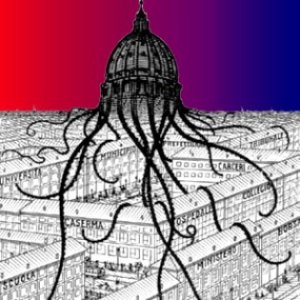
The State Crucifix

Review of Il Crocifisso di Stato By Sergio Luzzatto Einaudi, 2011. 127 pages

“Without the crucifix on the wall, they say, Italy would no longer be the same. I agree… it would be fairer, more serious, better.” These words grace the cover of Sergio Luzzatto’s compelling polemic against the “crucifix of the state.”

In Italy, no public building — be it a police station, courtroom or classroom — is without a crucifix appended to the wall. Many have argued that its presence is innocuous, or a matter of traditional identity rather than religious proselytizing. But whose identity? Certainly not that of Italian Jews like Marcello Montagnana, who raised the issue in the 1990s; or his wife, Maria Vittoria Migliano, whose opposition to the omnipresent symbol began in the 1980s. Or the growing number of secularists and non-Catholics who see in the state-sponsored crucifix a flagrant violation of Italy’s constitutional secularity and their right to freedom of conscience.

Luzzatto, who teaches modern history at Turin University, recounts the history of this ubiquitous Catholic symbol beginning with its rise in the Middle Ages as the signifier par excellence of discrimination against heretics, Jews and Muslims. Given its lengthy history of intolerance, it’s ironic that today’s Vatican wishes to pawn it off as the equivalent of a pizza margherita: bland, neutral, inoffensive. Even worse are the politicians who can’t agree on anything but the need for the crucifix — right, left and center all fall in line the moment the pope raises an eyebrow. This is astonishing for anyone familiar with the exceedingly partisan nature of Italian politics.

Author Natalia Ginzburg, according to Luzzatto, furnished the “Ur-Text” of arguments in defense of the crucifix. Her 1988 article was published in L’Unità, the official newspaper of the Italian Communist Party, and has been mined for decades by those wishing to preserve the public exposition of the crucifix. For Ginsburg, the crucifix is “silent,” “represents human suffering” and — perhaps most egregiously — “has always been there.”

Well, no, it hasn’t really. Luzzatto demolishes the inconsistency of Ginzburg’s thesis. The crucifix was affixed to the public wall at a precise moment in Italian history. It became a mandatory presence under Mussolini’s Fascist state. How’s that for benign, silent, universal? This book is a welcome corrective to such historical myopia and — for lack of a better term — bad faith.

From The American

More fun with comments

The following brief exchange is from the comments section to my recent post. I’d mentioned that Martin Yanosek – a commenter from Stanley Fish’s original NYT piece – wasn’t being clear. Did he agree with Fish, or did he agree with the judges? Or, improbably, both?

Anyway, he found my blog and cleared things up as best he could. I admit I’m still in the dark about his reasoning, though, and I’ve begun to suspect he may have been one of the judges in Strasbourg.

Martin Yanosek says:

Hello there, Mr. Di Martino! I agree with the court and, although I admire Dr. Fish’s analysis, I think Italian parents should be allowed to let their kids study in the presence of the crucifix. You’re right, though. I don’t know about “all” Italian parents. Only God does! You do believe in God, dontcha!?*

Oh, Mr. Di Martino, I see that I missed answering your question about how the crucifix is Christianity’s greatest symbol. In its evolution as a symbol one must take into consideration the cosmic irony of the crucifix’s meaning over time. The crucifix’s meaning has evolved from that of a purely utilitarian implement of torture to today’s meaning of everlasting life. I think the tremendous irony inherent in the evolution of the crucifix’s meaning is what makes it Christianity’s greatest symbol. I hope I answered your question. Regards, Martin Yanosek

Marc Alan Di Martino says:

Martin, I appreciate you taking a moment to clarify your stance. That said, your position is still unclear. You wrote, “If the Vatican was headquartered on Long Island I would probably disagree with the court’s ruling.” Why is that? Were that the case, and by your logic, American parents would have the right to have their children educated “in the presence of Christianity’s greatest symbol.” Or is it okay if it’s in a country you don’t live in, but not okay when it’s in yours?

As for the symbol itself, does it matter at all that most Christian denominations don’t recognize the crucifix as their symbol? Not to mention non-Christians and non-theists – which is quite a lot of us, even here in Italy. Don’t we have the right to have our children educated in the presence of our symbols? Or are we expected to submit before the irony of the holy Roman torture device?

Martin Yanosek says:

Long Island doesn’t have the tradition of Roman Catholicism that Italy does. Long Island has more of a Great Gatsby tradition. Without our traditions life would be as shaky as a fiddler on the roof of St. Peter’s Basilica! We should submit to the irony of everlasting life! Peace be with you, Mr. Di Martino! Amen.

Marc Alan Di Martino says: 

Just to recap, Italy has numerous traditions other than Roman Catholicism. It’s still just another religious confession, and it’s not even the oldest one we have. Shalom, Mr. Yanosek.

*No.

Fun with comments

Stanley Fish has a great Opinionator piece on the Lautsi vs. Italy ruling in the NYT. Read the whole thing; if I were so erudite, it’s what I’d have written in my post. Granted, mine was a sudden burst of WTF!? Fish nails it. (h/t goes to Stewart and Greg simultaneously!)

The comments are great, too. Here are some that stood out for me:

“While living in Italy a few years ago I felt sufficated by the constant displays of crucifixes — in my daughter’s day care center (Italy has excellent public pre-schools), post offices, city hall, etc. That, plus displays of the madonna, etc. in the same public places. I don’t know if this is the same case referred to by Mr. Fish, but I was rooting for the parents of a Muslim child who had brought suit that the presence of a crucifix at school discriminated against their child. The standard response — that the crucifix is a cultural symbol — makes sense to no one but Catholic Italians.” (mmsch)

“Italy is a Christian country. The cross is a symbol of Christianity. Why is it that you don’t complain or mention that in Islamic countries they have Muslim symbols in their schools and that in Israel they have Jewish symbols in their schools? Why is it that the Christians have to be tolerant of everyone else but you give a pass to the above mentioned religions? Do you think for one minute the Muslims or Jews would worry about offending Christians in their countries? I doubt it. How about an article on how tolerant the people of Saudi Arabia are and how they let non Muslims practice their religion in that country? And how Islam is so welcoming and tolerates non Muslims in their countries. Ask the Coptic Christians in Egypt about how they are allowed to display their faith at all without getting killed by Muslims. I missed your article on that one. Let’s just show how intolerant the Christians are and give others a pass on their prejudices. Yea let’s do that!” (vonvondavont)

“Given all that is going on in the world, this wasn’t worth reading. Of all the things to write about.” (Vern Edwards)

“How about this. The cross has been displayed there for years. You should be looking at the cross and thinking of that- thinking of what that means. If you don’t like it, leave. And that’s from someone who hasn’t been to church services in 20 years.” (MacBones)

“However flawed the court’s reasoning is about the crucifix, Italian parents have the right to have their children educated in the presence of Christianity’s greatest symbol. If the Vatican was headquartered on Long Island I would probably disagree with the court’s ruling. You’re analysis is superb, Dr. Fish! And the fish is also a great symbol of the Christian faith. I always knew you were one of us!” (Martin Yanosek)

I can’t quite follow the logic of that last one. Does Mr. Yanosek agree with the judges or with Fish? And how is the crucifix “Christianity’s greatest symbol?” And why does he think “Italian parents” are all Catholics?

I have people like him in mind when I write this blog; I’d appreciate it if more people got the simple idea into their heads that Italy is not a Catholic country populated exclusively by Catholics. It’s more diverse than that, even if the Strasbourgians have just fed the rest us to the lions.

It gets worse

It gets worse. In 2006 De Mattei said the following in an interview with Zenit, a Catholic news agency.

“Italian identity isn’t just generically Catholic, but is defined by the function of the papacy. Italy’s vocation isn’t simply to host the papacy, but to serve it, to permit the papacy to perform its universal role. Italy is itself when it serves the Church, and it betrays its own identity when it reneges the Church.”

Here we go again: I’d love to know why these people think throwing around the word “universal” makes them sound so important, so profound. No religious confession is universal in character.

This is a prime example of the way Italy has been compromised by the Catholic Church. Italy is a sovreign nation, not a hotel for the papacy. This kind of thing is disrespectful to millions of Italians who are not believers in the supernatural fairytale of Roman Catholicism. It’s wholesale bollocks.

There are countless people running around saying idiotic crap like this. They want us to buy into their obsession with authority. They want us to kneel and kiss rings and fawn at the riches of the papacy. They want us, in short, to stop thinking and let them catapult us back to the Middle Ages.

Well, no thank you.

Creationists say the darndest things

Roberto De Mattei is back. He’s a crackpot creationist who also happens to be the Vice President of the National Research Council (CNR). From an American perspective, he might be comparable to Francis Collins. Both are outspoken Christians, though they would probably argue over which version is the true one.

Collins may be a bit of a clown, but I’m convinced he would never resort to the kind of malicious theodicy that De Mattei has with regard to the recent disaster in Japan. Speaking – or, preaching – on Radio Maria, De Mattei has posited that the catastrophe is part of (surprise, surprise) Almighty God’s plan.

Quoting a Monsignor Mazzella he said, “Great catastrophes are a terrible but paternal sign of God’s benevolence which call attention to the ultimate scope of our lives.”

To this he added: “If the Earth offered no danger, pain or catastrophe it would fascinate us to no end, and we would too easily forget we are citizens of heaven.”

And, “…catastrophes are the just punishments of God” inasmuch as “to the guilt of the Original Sin are added our personal and collective sins, and while God awards and punishes in eternity, it is on Earth that he awards and punishes nations.” Listen to him here if you know some Italian.

Now, I’m not surprised by any of this. If you really believe there is a God who made the world, destroyed it by flood, remade it, intervened occasionally here and there with his prophets, and has an ultimate plan for all of us, then I suppose such reflections are only natural. That, we might say, is the root of the problem.

Religion warps minds. There can be little doubt about this. It has the capacity – I’m paraphrasing Steven Weinberg – to make good people do evil things. De Mattei’s speech, like so many American pastors’, fits this bill.

What happened in Japan is nearly unthinkable: an earthquake accompanied by a tsunami cut loose an atomic disaster. Many lives have been lost or ruined, and at present we have little or no idea what’s in store for the Japanese people. There’s radiation in the seawater, and there’s no reason to thing this thing will end tomorrow.

I can think of no better reason, if you believe in God, to abandon that belief this instant. Natural disasters necessarily come under God’s plan if you believe he has one. That is, if he is benevolent, omnipotent and omniscient. If he’s not, then your God is no better than a broken air-conditioner. Get rid of it.

The “reasoning” of De Mattei and anyone else who searches for God’s benevolence in the untold sufferings of humanity is hardly worth responding to. But it’s the maliciousness, the arrogance of De Mattei that irks me. He should be shunned for such assertions instead of made Vice President of the CNR.

But this is Italy – what do you expect?

* You can sign a petition calling for De Mattei’s resignation here.

The crucifix post-Strasbourg

Carla Corsetti, the Secretary of Democrazia Atea –  Italy’s only explicitly atheist political party – has penned a response to the Strasbourg ruling that religious symbols in public schools are not in violation of human rights. Corsetti is a lawyer who has herself appealed to the Administrative Regional Court (TAR) of Lazio over the presence of the crucifix in her son’s schoolroom. Here is that link, in English.

Winners and Losers by Carla Corsetti

Culture wars have neither winners nor losers; either everyone wins or everyone loses. The difference is measured by who is aware of this and who isn’t. And we are among those who understand the universal value of certain conquests. The European Court has told us that the crucifix is a passive symbol, inert, and it has told us that decorating public schools with it isn’t in violation of human rights.

This interpretation – which we do not share – won’t stop us. We don’t feel culturally defeated and, on closer inspection, the Catholics themselves are the losers. After this ruling no Catholic will be able to calmly assert that the crucifix is a symbol which “unites”, or that is it shared peacefully. After this ruling the crucifix is trapped between those who wish to impose it through abuse of power and those who refuse to submit to it. By now the crucifix is unequivocally, definitively and irreversibly the symbol of a bullying religious confession at the expense of those who are not its members.

Catholics were unable to defend the crucifix as one defends the most precious things, which are to be cherished with discretion and in private. At the cost of imposing it they’ve deprived it of its religious significance, presented it as a cultural symbol and accepted its secularization. They weren’t even upset when someone justified its ostension as part of the furnishing of a public classroom, along with the chairs and the wastebaskets. They were the first to desecrate it.

We will accept the cultural and legal challenge while continuing to call attention to the fact that this is a symbol of death, a symbol which has accompanied genocide and war, massacre and rape, dirty business and paedophilia. It doesn’t belong to us, not even culturally, and from today onwards we have yet another reason to remove it from our children’s sight.

And here is a revamped crucifix reflecting the new reality.

It's our symbol, too, right?


Lautsi vs. Italy: UAAR press conference

Raffaele Carcano has a great moment (below, in Italian) when he notes that, in Pakistan, a Christian may be put to death for “offending” Islam. How might that sit with Italy’s defenders of the faith? After all, it’s a question of tradition.

By the logic of yesterday’s decision, why not return to outright proselytizing, forced masses, or kidnapping children from non-Catholic families? Why stop at the presence of the crucifix? Hell, let’s make a quantum leap back to the dark ages, dust off the iron maidens and fill those torture chambers. Because that’s the direction Europe is now pointing in.

It’s been a dark week here in the European Union.

Theoctopus

via

Theocracy

15 to 2, in favor of theocracy. I’m speechless, unnerved, irritated and perplexed.

“According to the judges, there is no proof the crucifix has any influence over the students in classrooms where it is present.”

Well Jesus-fucking-Christ that’s a bit presumptuous, ain’t it? And if that’s the case, why can’t we put other symbols up next to that of the Holy Inquisition?

It’s theocracy. What other word can there be for this?

And think, there’s not even any hell for these bastards to go to. At times I wish there was.

Judge Luigi Tosti discharged for refusing to serve beneath the crucifix

Yesterday the Italian judge Luigi Tosti was officially discharged for refusing to serve in a courtroom adorned with the crucifix. The crucifix is a mandatory presence in all Italian public offices, classrooms, courtrooms and police stations. If you are a non-Catholic, non-believer or believer with respect for separation of church and state, well…you’re out of luck.

Tosti “had repeadedly and in vain called for the removal of the crucifix from the courtrooms” – according to the UAAR’s website – “or, instead, that all other religious symbols, and in particular the Jewish menorah, be displayed as well.” We can now see what that reasonable request got him.

What sickens me is that the Italian government is incapable of abiding by its own secular constitution. What’s worse is when they attempt to throw the crucifix at us as if it were itself the very symbol of the secular nature of the state. It is incessantly referred to as neutral, silent, universal. A gathering place for Jew and Gentile, believer and non-believer. The most ecumenical goddamn thing you ever saw. How can you not just love it?

What is neutral about the Inquisition? What is silent about the Crusades? What is universal about any religious confession?

They like to use those words because they are abuzz with secular meaning. It’s a bit rich, though, coming from men like Vatican Secretary of State Tarcisio Bertone and Joseph Ratzinger, and not unlike Mahmoud Ahmadinejad prattling on about “human rights” at the UN. But anyone can see that it’s a pack of lies; the crucifix is as divisive a symbol as ever humanity has devised.

But this isn’t about the sordid history of the crucifix as symbol of religious might and theocratic muscle; it’s about freedom from religion. It’s about the neutrality of the state in religious affairs.

This week Italy celebrates its 150th birthday; it was born in opposition to that very same august religious institution – the Catholic Church – that it kneels before today. Three days from now, on March 18, the European Court for Human Rights in Strasbourg will give its final decision as to whether the public display of the crucifix is unconstitutional. You can be sure that, no matter what, not a single crucifix will come down. If the Vatican is indeed a sinking ship, Italy has vowed to go down with it, crucifix in hand.

This is a mischievous pact. There is no religious equality here, no breathing room from state-sponsored Roman Catholicism. Not even a judge is safe from the maw of this weasel-theocracy, the kind without even the courage to call itself one. Given the choice between safeguarding the constitutional rights of its citizens and kowtowing to the gluttonous bishops, Italy consistently chooses the latter. What a disgrace.